Most people who look up their Vedic astrology sign expect to find what they know from Western astrology - a sun sign, a personality type, maybe a compatibility match.
And then they discover their Moon sign is different here.
Not just a little different. Often, an entirely different sign.
That’s because in Jyotish, the Moon (Chandra) is not a secondary planet. It is arguably the most important one. The sign your Moon was in at the moment of your birth - your rashi - is what Indian astrologers have been reading horoscopes from for centuries. Not your Sun sign. Your Moon sign.
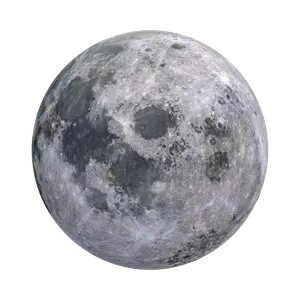
In Vedic astrology, the Moon (Chandra) represents manas - the mind. It is the natural significator of the mother (Matrikaaraka), emotions, and mental well-being. Chandra rules Cancer (Karka Rashi), is exalted in Taurus (Vrishabha) and debilitated in Scorpio (Vrischika). Its Vimshottari Mahadasha lasts 10 years. A waxing Moon (Shukla Paksha) is a natural benefic; a waning Moon (Krishna Paksha) is a natural malefic - the same planet, two different qualities depending on the lunar phase.
What Is Chandra? Core Significations in Jyotish
"Sūrya is the soul of all. Chandra is the mind.
- BPHS · Ch. 3, Slokas 12–13
The Sun (Surya) is the Atman - the soul principle. The Moon is manas - the active mind, the emotional processor, the layer of yourself you live in every single day.
This is where Vedic astrology makes a move Western astrology largely doesn’t. The mind is not abstract. It is the lens through which every experience arrives. A well-placed Chandra means a mind that is calm and able to enjoy what life brings. An afflicted Chandra means a mind working against the person - regardless of what external circumstances look like.
In the planetary cabinet, BPHS gives Chandra royal rank: “Of royal status are Sūrya and Chandra.” (Ch. 3, Slokas 14–15). The Sun is King. The Moon is Queen.
Chandra’s core significations: mother (Matrikaaraka), emotions, imagination, blood (rakta) among the Sapta Dhatus (Ch. 3, Sloka 31), water and all things fluid, the chest and lungs, Monday (Somavar), pearl (moti), and silver.
Physically, the BPHS describes Chandra as “learned and with a round body. She has auspicious looks and sweet speech, is fickle-minded and very lustful.” (Ch. 3, Sloka 24). The “fickle-minded” attribution isn’t a character flaw - it mirrors the Moon’s astronomical nature. Chandra moves fastest of all Grahas, covering 13–15° daily, shifting signs every 2.25 days. That speed is the mind. Thoughts and feelings move fast. Your Moon placement shows how your mind processes that speed.
Chandra’s Strength - Exaltation, Own Sign & Debilitation
The waxing-waning distinction - the most overlooked factor. A full Moon (180° from the Sun) is Chandra at peak strength. A new Moon (0° conjunction) means Chandra is combust. The Moon’s phase - paksha bala - is a factor independent of sign. A Scorpio Moon three days past full is considerably stronger than a Taurus Moon three days before new.
“Waning Chandra is a malefic and waxing Chandra is a benefic. Should Chandra be yuti with a benefic, or receiving a Drishti from a benefic, she turns a benefic, even if in a waning state.
— BPHS · Ch. 3, Sloka 11 (Santhanam addition)
Rohini is considered the Moon’s favourite station. A Moon in Rohini brings emotional groundedness, creativity, and a natural magnetism.
The Moon rules Cancer and feels at home here. Emotional depth, strong maternal instinct, domestic intelligence.
Mars-ruled, intense, secretive. The Moon’s need for emotional flow gets compressed here. But context matters enormously. A debilitated Moon in the 11th with Jupiter’s aspect reads very differently from one in the 8th conjunct Rahu.
Moon in the 12 Houses - Key Effects
The Moon brings emotional colouring, sensitivity, and the themes of mind and mother to whatever house it occupies.
Moon’s Nakshatras - Rohini, Hasta & Shravana
Chandra rules three of the 27 nakshatras. If your Moon falls in one of these, Chandra is the lord of your birth star - lunar themes colour your mental baseline directly.
The Moon’s home nakshatra, presided by Brahma. Beauty, creativity, sensuality, the enjoyment of the physical world. Moon in Rohini people are emotionally grounded and naturally attractive.
Presided by Savitri. Means “the hand.” Skilled, practical, service-oriented. Often work in medicine, teaching, or craft.
Presided by Vishnu. Means “to listen.” Learning through listening, oral transmission, pilgrimage and music.
Strong Moon vs. Weak Moon - How to Read Yours
Of all the planets in a kundali, the Moon’s condition is the single most revealing factor in someone’s day-to-day quality of life. The Sun shows your soul’s direction. The Moon shows whether you’re at peace while walking that path.
Strong Moon
- Emotional stability and nurturing instinct
- Good memory and popularity with the public
- Calm mind that enjoys what life brings
- Harmonious relationship with the mother
Weak Moon
- Chronic anxiety without a clear cause
- Disturbed sleep and recurring worry loops
- Complicated maternal relationship
- A mind that processes the same worry repeatedly
Chandra Mahādaśā - What 10 Years With the Moon Looks Like
When Chandra is strong and well-placed, the BPHS describes it in expansive terms: opulence and glory, good fortune, gain of wealth, auspicious functions at home, attainment of a high position in Government, acquisition of conveyances, clothes, birth of children.
In plain terms: home purchase, marriage, children, career recognition in public-facing fields. The Moon governs mass appeal - writers, politicians, food and hospitality entrepreneurs often flourish here.
When Chandra is weak: mental tension, trouble from mother and loss of wealth. If waning Moon is in the 6th, 8th, or 12th - inimical relations with Government, loss of wealth, distress to mother.
The pattern: Chandra Mahadasha amplifies whatever the Moon already represents in your kundali. A well-placed Moon gets rewarded. An afflicted Moon surfaces emotional patterns that have been running underneath - often as relationship strain, maternal health issues, or a restlessness that won’t resolve until its root is addressed.
"During the Dasha of Chandra there will be opulence and glory, good fortune, gain of wealth, auspicious functions at home, and attainment of a high position."
- BPHS · Ch. 52, Slokas 16–22
Remedies for a Weak Moon (Chandra Upay)
Classical remedies for strengthening Chandra.
Somavar Vrat - Monday is Chandra’s day. The most accessible and widely practised remedy.
Om Shram Shreem Shroum Sah Chandraya Namah - 108 times on Monday mornings, ideally during Chandra Hora.
Shiva is depicted as Chandrashekhara, the Moon-crested one. One of the oldest classical remedies for Chandra.
Rice, milk, silver, white cloth, white flowers.
On the little finger of the right hand - but only after chart-specific consultation. Pearl amplifies lunar energy; it helps a weak Moon and can be counterproductive for an afflicted one.
Moon is Matrikaaraka. Unresolved maternal conflict is the most overlooked weakener of Chandra in a kundali, and addressing it is often the most effective remedy of all.
When someone asks “is my Moon good or bad?” - the honest answer is: it depends on the sign, the house, the phase, the aspects, and the dasha running at the time.
Chandra is not just your emotional type. It is the planet that governs how settled your mind is, your relationship with your mother, and your capacity for inner peace - regardless of what the rest of your life looks like from the outside. Getting clear on your Moon is where Vedic astrology starts to become genuinely useful.