Introduction
This is the last placement in the 6th lord set, and it saves one of the toughest slokas for the end.
Always spend on vices. Hostile to learned people. Torture living beings.
Three lines, none comfortable.
Let us read them slowly, because a sloka is a compression of habits into a few phrases, and the habits are what you can change.
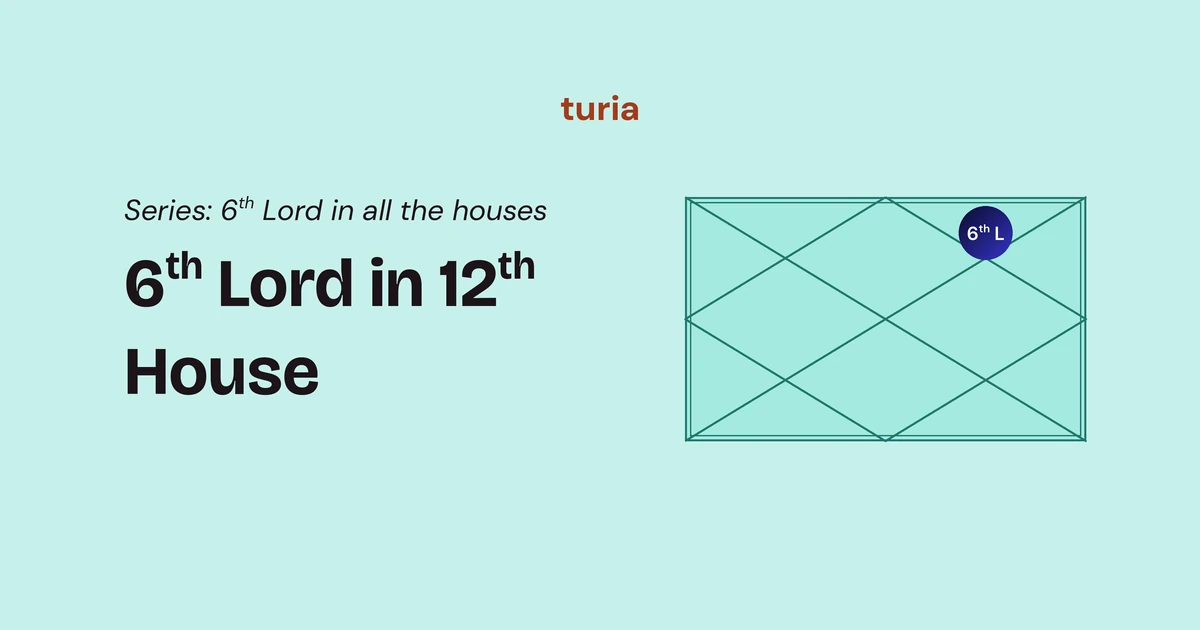
The 12th house is Vyaya Bhava: expenses, sleep, losses, isolation, foreign lands, the things that happen away from view. The 6th lord (Shashthesh) is the planet of rivals, debts and daily service. When it sits in the 12th, effort drains outward.
In this guide we will cover what BPHS says, how each line shows up in life, what the dusthana-in-dusthana claim does and does not mean, the Dainya Yoga exchange, and how strength and dasha change the result.
Quick answer
6th lord in the 12th house places the lord of rivals, debts and service (Ari Bhava) in the house of expenses, losses and distant places (Vyaya Bhava). BPHS says the native "will always spend on vices, be hostile to learned people and will torture living beings" (Ch. 24, Sl. 72). Read as tendencies: leaking money through habits, a chip on the shoulder around the educated, and harshness toward those who depend on you. A full exchange with the 12th lord in the 6th forms Dainya Yoga.
What "6th Lord in the 12th House" Actually Means
Find the sign on your 6th cusp and note its ruler. For a Taurus lagna the 6th sign is Libra, so Venus is the 6th lord. For a Scorpio lagna the 6th sign is Aries, so Mars is.
If that planet sits in the 12th house, you have this placement.
BPHS Ch. 11 labels the 12th plainly:
"Evil Bhavas, or Dusthan Bhavas are Ari, Randhr and Vyaya Bhava." (BPHS, Ch. 11, Sl. 33-36)
A dusthana lord in another dusthana. This is also a cadent house, which means results are slower and less visible, and tend to work out in the background.
The Core Classical Result (BPHS Ch. 24, Sl. 72)
The sloka, in full:
"If Ari's Lord is in Vyaya Bhava, the native will always spend on vices, be hostile to learned people and will torture living beings." (BPHS, Ch. 24, Sl. 72)
There is no softening line here, no famous or wealthy to balance it. That is why the sloka needs a careful reading rather than a quick one.
Three habits are named. Spending. Resentment toward the learned. Harshness toward living beings. Each one is something a person can notice in themselves.
The word always is classical emphasis. Real people with this placement vary a lot depending on the planet, the sign and the dasha.
Spending, Vices and Leaks
Always spend on vices. In today's terms: money that leaves quietly.
The late-night food delivery, the subscriptions never cancelled, the impulse trip, the cigarette pack, the betting app, the shopping spree after a bad week. Small outflows that add up faster than the salary notices.
The 12th also governs sleep and escape. Spending is often the way the mind runs from stress.
If this is you, make the leak visible. Track every expense for thirty days. Pay savings first, on the day salary arrives. Delete the apps that make spending a single tap. It is dull advice, and it works better than any gemstone.
Learned People and the Chip on the Shoulder
Hostile to learned people. This one is harder to see in oneself.
It describes a person who bristles around degrees, titles and fluent English. The reaction usually comes from a feeling of being judged, not from contempt. Someone who built a career without a formal education and still flinches when a professor walks into the room.
The fix is to turn the hostility into curiosity. Ask the learned person how they think. You will find that most of them are as unsure as you are, in different areas.
Over time, this placement often produces people who learn deeply in a single practical field and gain quiet confidence from it.
Harshness Toward Those Who Depend on You
Torture living beings. The words are strong, so read them in proportion.
They do not describe a cruel person. They point to a temper that shows up when someone weaker is within reach: staff, children, animals, a junior at work, a spouse in a bad mood.
The 12th is the house of what happens behind closed doors. The 6th lord brings the competitive, impatient edge. Together, they can show a person who is polite in public and short-tempered at home.
If this is you, watch the moment right after a hard day. Sit in the car for five minutes before entering the house. Speak after you breathe.
Foreign Lands and Isolation
BPHS does not mention foreign lands in Sl. 72, but the 12th house traditionally does. With the 6th lord here, service and employment in distant places are common: work abroad, a posting in a far city, hospital or hostel life, long hours in quiet places.
This is a tendency drawn from the house, and not a classical statement in this sloka. For foreign settlement, check the 9th, the 10th and the dasha. A first look with the Foreign Settlement Checker helps.
Dusthana in Dusthana: What Phaladeepika Adds
Many websites call this placement a Vipareeta Raja Yoga and stop there.
Phaladeepika's commentary explains the idea. It notes that when the lords of the 6th, 8th and 12th occupy their own houses or one of the other two, later tradition holds that they produce good results. The yoga Phaladeepika describes for the 12th house is Vimala Yoga:
"will be frugal in his expenses and clever in saving money" (Phaladeepika, Yoga Adhyaya, v. 69)
Notice how directly this reverses the BPHS sloka on spending.
The same commentary also says that Parashara's BPHS does not accord this recognition, and that for the 6th lord in the 12th the plain Sl. 72 result applies. Frankly, treat Vimala as a possibility that depends on the full chart, and not as a promise from one placement.
The Dainya Question: When It's a Full Exchange
When two house lords occupy each other's houses it is called Parivartana. Phaladeepika calls the exchanges among the 6th, 8th and 12th lords Dainya Yogas, and number eleven on its list is:
"(11) the lord of the 6th in the 12th and the lord of the 12th in the 6th" (Phaladeepika, Dainya Yogas)
On Dainya Yoga the text says the person "will encounter obstacles in all his ventures" (Phaladeepika, Yoga Adhyaya, v. 33).
Read it as a pointer to effort. A planet in a dusthana that has swapped with another dusthana lord is under pressure from both ends, and dignity and aspects decide how that pressure resolves.
Strength: What Changes the Outcome
Own sign or exalted 6th lord in the 12th is the best version. Expenses are controlled and work abroad pays well.
Debilitated 6th lord in the 12th needs a check for cancellation of debilitation (Neecha Bhanga). Without it, the spending and temper themes sharpen.
Combust 6th lord, too close to the Sun, mutes results until its own dasha.
Aspected by Jupiter is a real relief. It improves judgement about money and softens the temper.
Conjunct Saturn, Mars or Rahu raises the stakes: bigger outflows, stronger tempers and longer stretches of isolation.
When the Results Actually Show Up
The 6th lord's Mahadasha and Antardasha are the main windows. A year of heavy expenses, a posting abroad, a hospital stay that forces a lifestyle reset, a quiet phase of study.
The 12th lord's dasha, and Saturn's transit over the 12th, bring spending and isolation themes forward.
6th Lord in the 12th House vs Other Placements
| Placement | Core theme | How it differs from the 12th house |
|---|---|---|
| 6th lord in 12th house | Spending habits, resentment, harshness | The comparison point here |
| 6th lord in 10th house | Public career, foreign comfort (Sl. 70) | Visible and rewarding |
| 6th lord in 11th house | Gain through enemies (Sl. 71) | Inflow, not outflow |
| 6th lord in 8th house | Hidden stress, envy (Sl. 68) | Secrecy, not expense |
FAQ
What does 6th lord in 12th house mean?
The lord of rivals, debts and service sits in the house of expenses, losses and distant places. BPHS lists spending on vices, hostility to learned people and harshness toward living beings as tendencies.
Is 6th lord in 12th house good or bad?
The BPHS sloka is difficult, with no balancing line. Later tradition adds a Vimala or Vipareeta possibility under conditions. Planet strength, aspects and dasha decide which side leads.
Is 6th lord in 12th house a Vipareeta Raja Yoga?
Later tradition links dusthana lords in dusthanas to good results, and Phaladeepika describes Vimala Yoga for the 12th. Its commentary notes that BPHS gives no such recognition. Check the full chart first.
Will I spend too much with 6th lord in 12th house?
The sloka points to money leaking through habits and escapes. Tracking expenses, saving first and removing one-tap spending usually reduces the pattern more than any remedy.
Does 6th lord in 12th house mean settling abroad?
The 12th house suggests foreign places and service far from home, but Sl. 72 does not say so. Check the 9th and 10th houses and the dasha before drawing a conclusion.
Is 6th lord in 12th house a Dainya Yoga?
Only as a full exchange: 6th lord in the 12th and 12th lord in the 6th together. Phaladeepika lists it as Dainya Yoga number eleven. Without the reciprocal placement, the plain BPHS result applies.
Closing
So is 6th lord in the 12th house a bad placement? It is a demanding one, and every line of its sloka points to a habit you can see and change.
Track the money for a month, pause before you speak, and start with the smallest leak.