Have you ever looked at your relationship and thought:
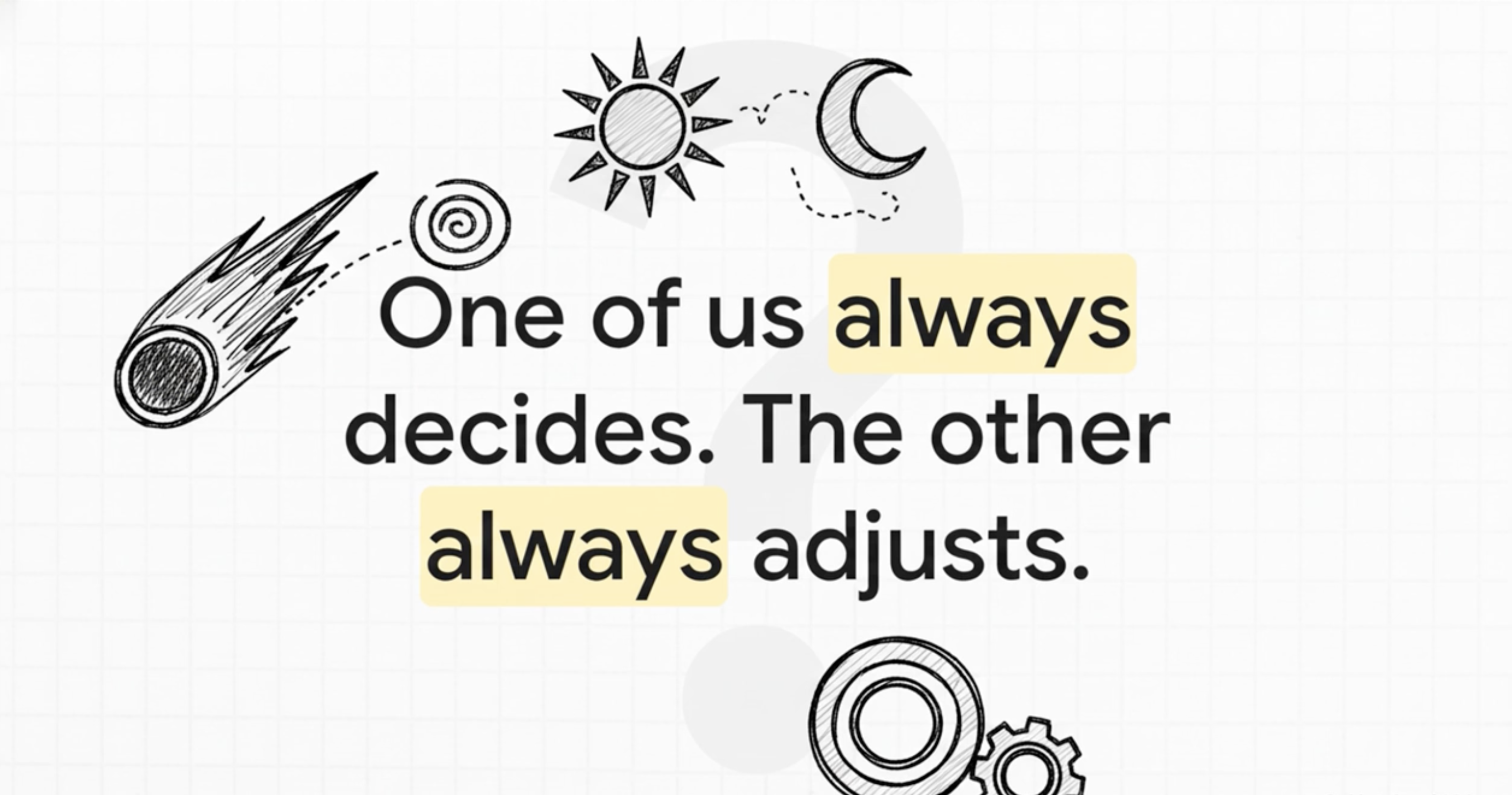
- “One of us always decides.”
- “One of us always adjusts.”
- “One of us pushes, the other withdraws.”
- “Even small choices feel like a power struggle.”
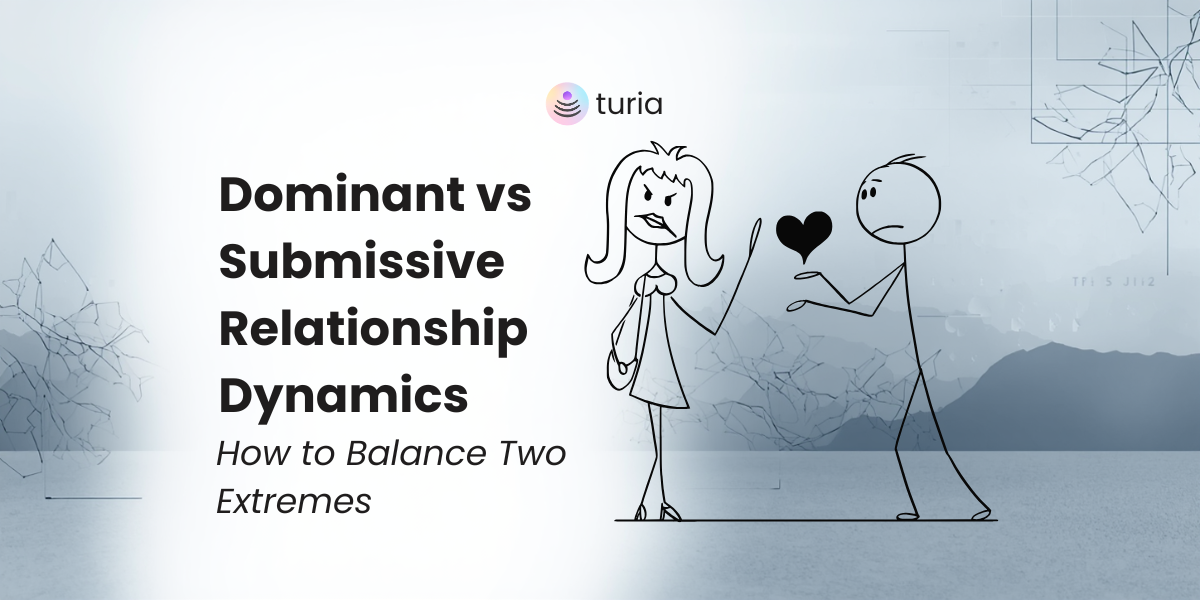
This dominant vs submissive pattern shows up in love more often than people admit - especially in long-term relationships where family expectations, money, and future decisions add pressure.
Here’s the astrology-first truth: these dynamics usually aren’t about who is “better.” They’re about how your chart handles power, fear, desire, and emotional safety.
In Vedic astrology, the dominant/submissive polarity is most strongly shaped by:
- Sun (Surya): authority, ego, leadership, identity
- Mars (Mangal): assertion, anger, pursuit, boundaries
- Saturn (Shani): control, fear, duty, rigidity, endurance
- Moon (Chandra): emotional safety, sensitivity, needs
- Venus (Shukra): harmony, pleasing, negotiation, affection
- Rahu/Ketu: extremes, obsession vs detachment, compulsion vs withdrawal
Add the houses that run relationships - especially the 1st (self), 7th (partner), 2nd (speech/family), 4th (emotional home), and 8th (power/intimacy) - and you get a clear map of why one person ends up “leading” while the other ends up “following.”
Want a clear, chart-specific answer for your relationship - who dominates, who submits, why it happens, and how to balance it without breaking the bond?
Consult an expert relationship astrologer
Note: Astrology shows tendencies, not fixed destiny. Your chart describes defaults under stress; your awareness + skills decide the outcome.
First, a clean definition
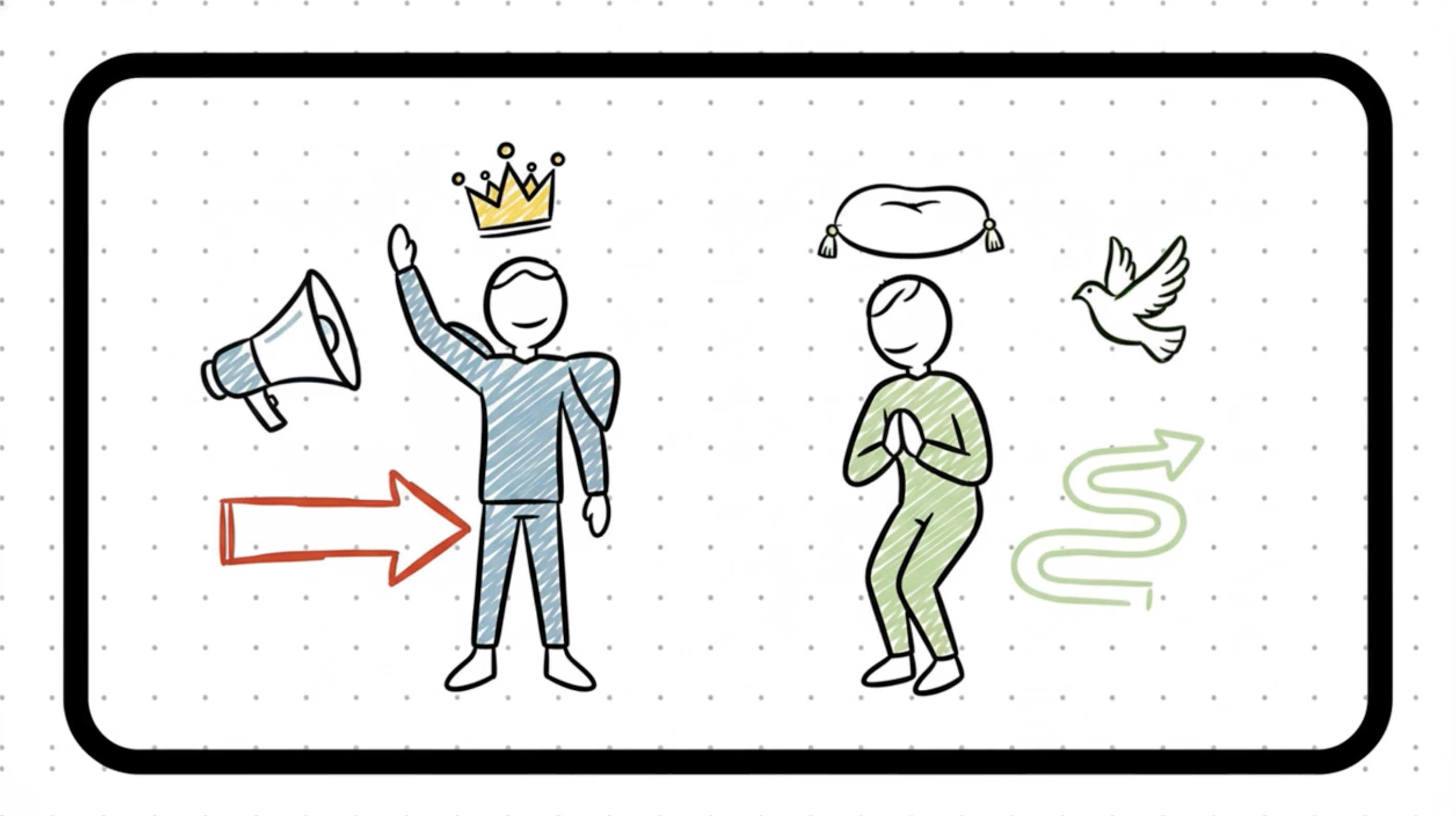
When we say dominant and submissive here, we’re not talking about sexual roles.
We mean the communication-and-decision pattern in everyday life:
- Dominant-leaning partner: leads, decides, pushes for clarity, sets the pace, dislikes uncertainty, speaks directly.
- Submissive-leaning partner: adapts, avoids conflict, gives in to keep peace, softens disagreements, prefers indirect communication.
Neither style is “wrong.” The problem begins when it becomes fixed.
Healthy relationships have flexible leadership:
- sometimes you lead,
- sometimes your partner leads,
- and both of you can say “no” without fear.
Unhealthy relationships have rigid roles:
- one person becomes the parent/manager,
- the other becomes the child/employee,
- and resentment builds quietly.
Astrology lens: where dominant/submissive dynamics come from
Think of this dynamic as a tug-of-war between two forces:
- Power + assertion (Sun/Mars/Saturn)
- Bonding + safety + harmony (Moon/Venus)
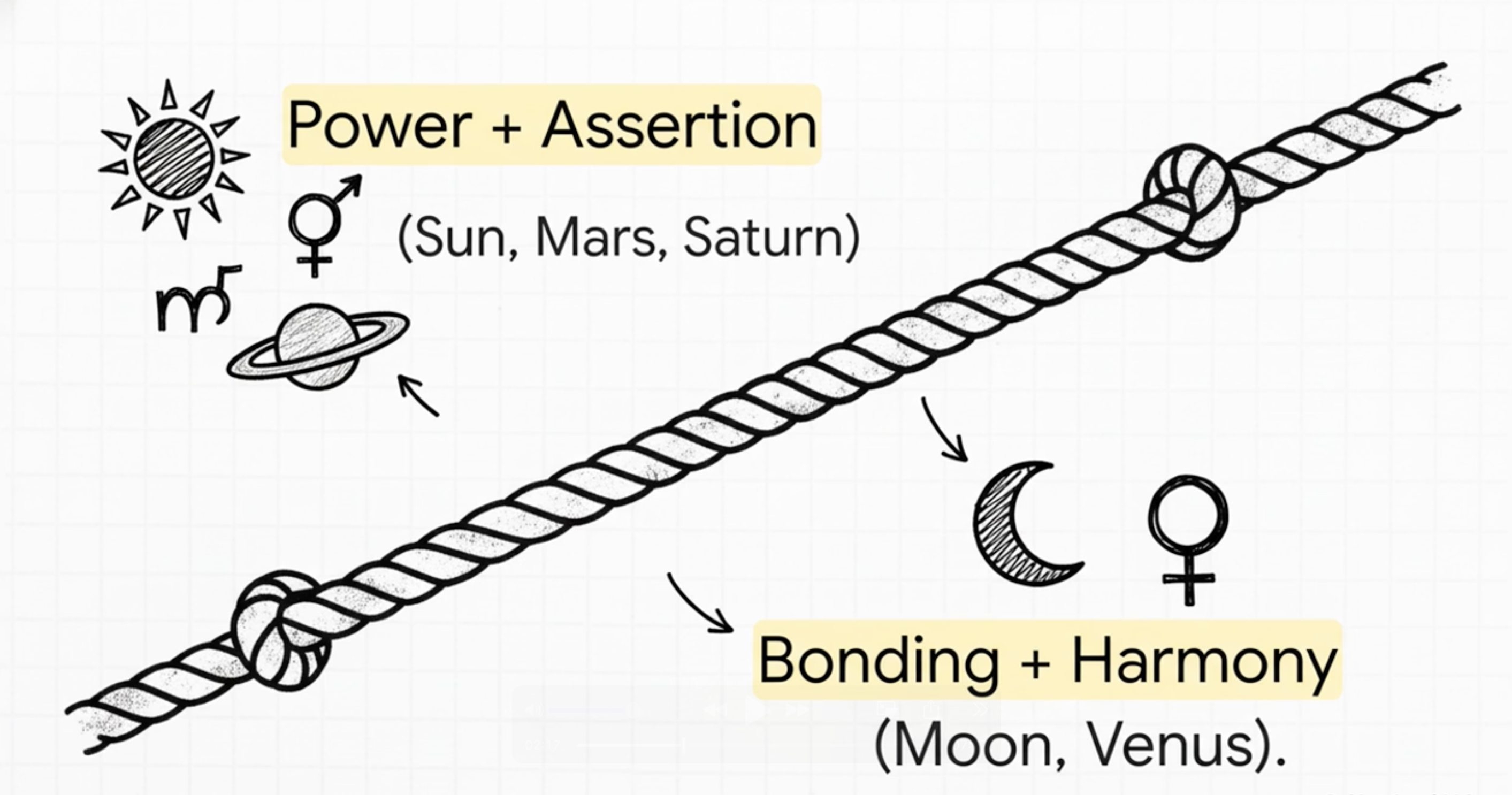
When your chart leans hard into (1), you can default to dominance.
When your chart leans hard into (2) - especially under fear - you can default to submission.
But the deeper truth is: both dominance and submission are often stress responses.
- Dominance can be: “If I control the outcome, I feel safe.”
- Submission can be: “If I don’t resist, the relationship stays intact.”
Rahu/Ketu can push it into extremes:
- Rahu makes it obsessive, controlling, possessive, or status-driven.
- Ketu makes it detached, avoidant, silent, or emotionally unavailable.
Quick diagnostic table (astrology patterns → relationship behaviour)
| Astrology signature (D1 chart) | Dominant/submissive tendency | How it shows up in communication |
|---|---|---|
| Strong Sun / Sun–Saturn / Sun–Rahu | Dominant (authority/ego) | “My way is right”; difficulty admitting fault; respect becomes a big trigger |
| Strong Mars / Mars–Mercury / Mars–Rahu | Dominant (assertion/heat) | Quick decisions, sharp tone, debates that become fights |
| Saturn heavy / Saturn on 1st/7th / Saturn afflicting Moon/Venus | Dominant OR submissive (fear control) | Rigid rules; emotional coldness; power used through silence or duty |
| Moon afflicted / Moon–Saturn / Moon–Rahu | Submissive (fear + reassurance need) | People-pleasing, anxiety, walking on eggshells, over-explaining |
| Venus weak/afflicted / Venus–Saturn / Venus debilitated | Submissive (harmony at any cost) | Avoids hard conversations; says yes then resents; “I’m fine” when not fine |
| Rahu on 7th / Rahu–Venus / Rahu–Moon | Extreme swings | Obsession, jealousy, tests, suspicion; power games |
| Ketu on 7th / Ketu–Moon / Ketu–Mercury | Withdrawal/submission | Shutdown, detachment, disappearing during conflict |
This table isn’t “judgement.” It’s a starting map.
The 2×2 framework: Power vs Peace
Here’s a simple way to understand why couples get stuck.
Two axes:
- Power drive (Sun/Mars/Saturn high): “I need control/clarity.”
- Peace drive (Moon/Venus high): “I need harmony/safety.”
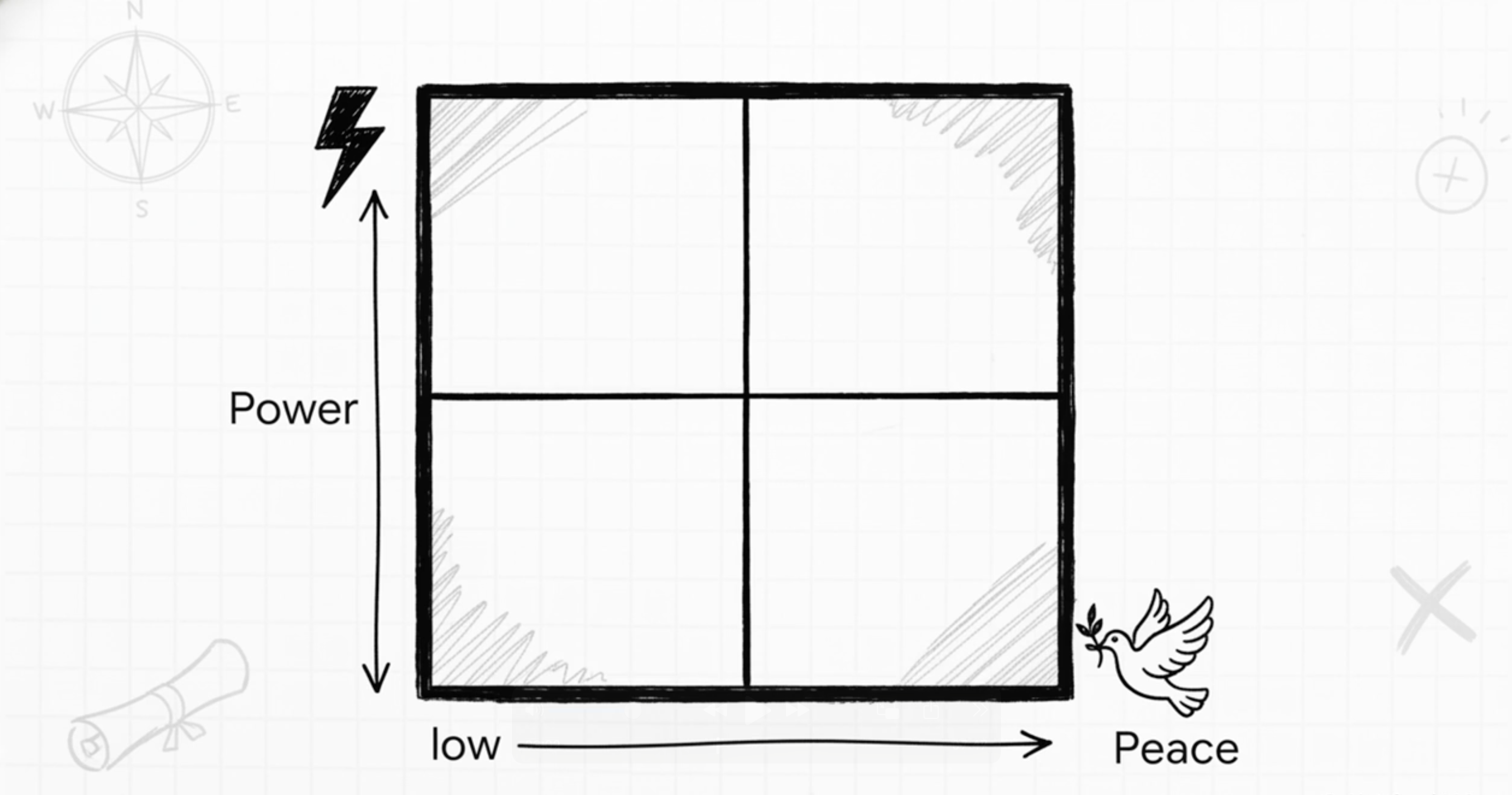
Now combine them.
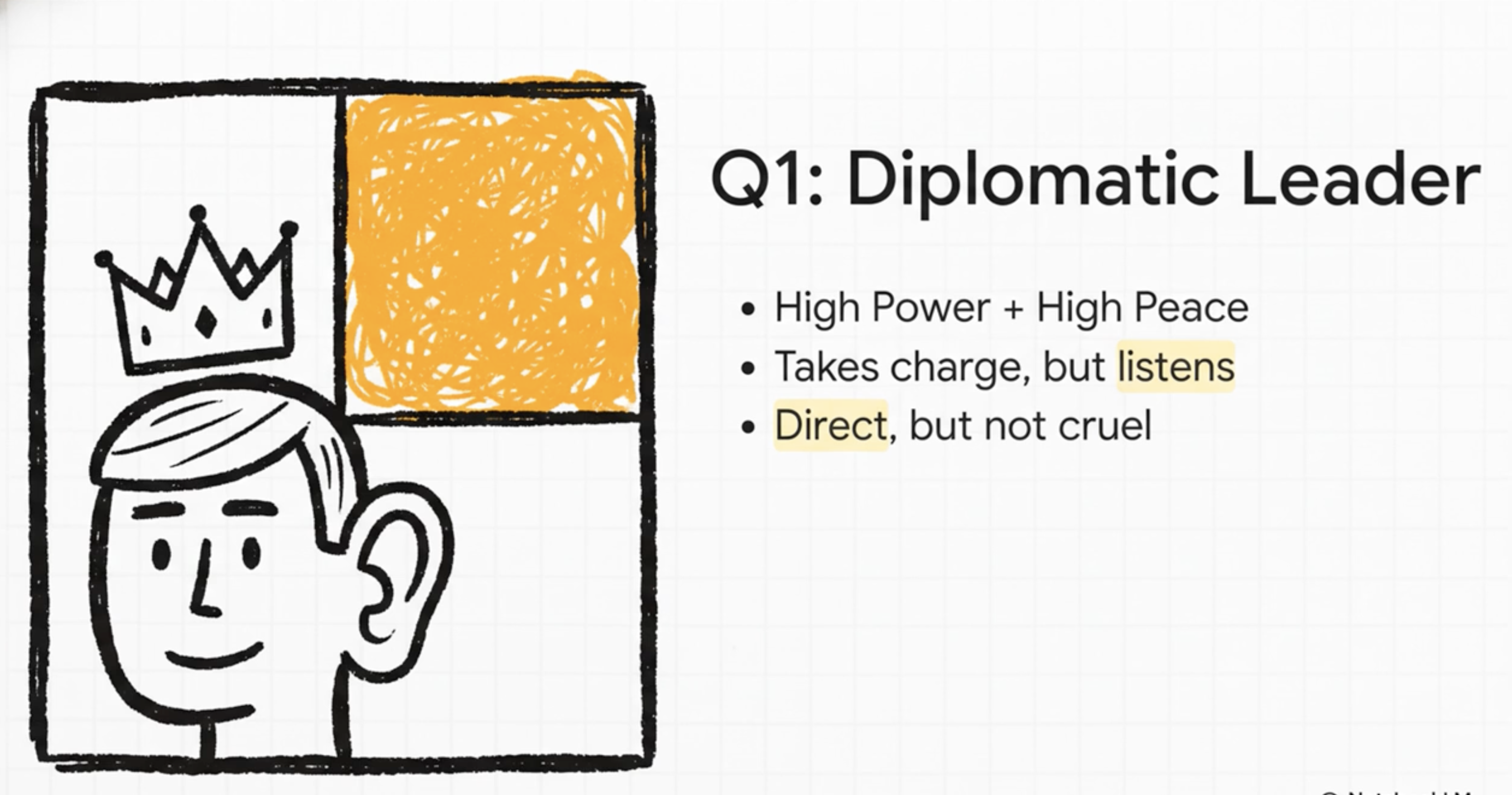
Quadrant 1: High Power + High Peace = The Diplomatic Leader
Astrology flavour:
- Sun/Mars strong but Venus or Jupiter supports (softness + ethics)
How it looks:
- Takes charge, but listens.
- Direct, but not cruel.
Relationship risk:
- “I’ll lead for both of us” becomes a habit.
Balance move:
- Ask consent before leading: “Do you want me to take this decision or do you want to?”
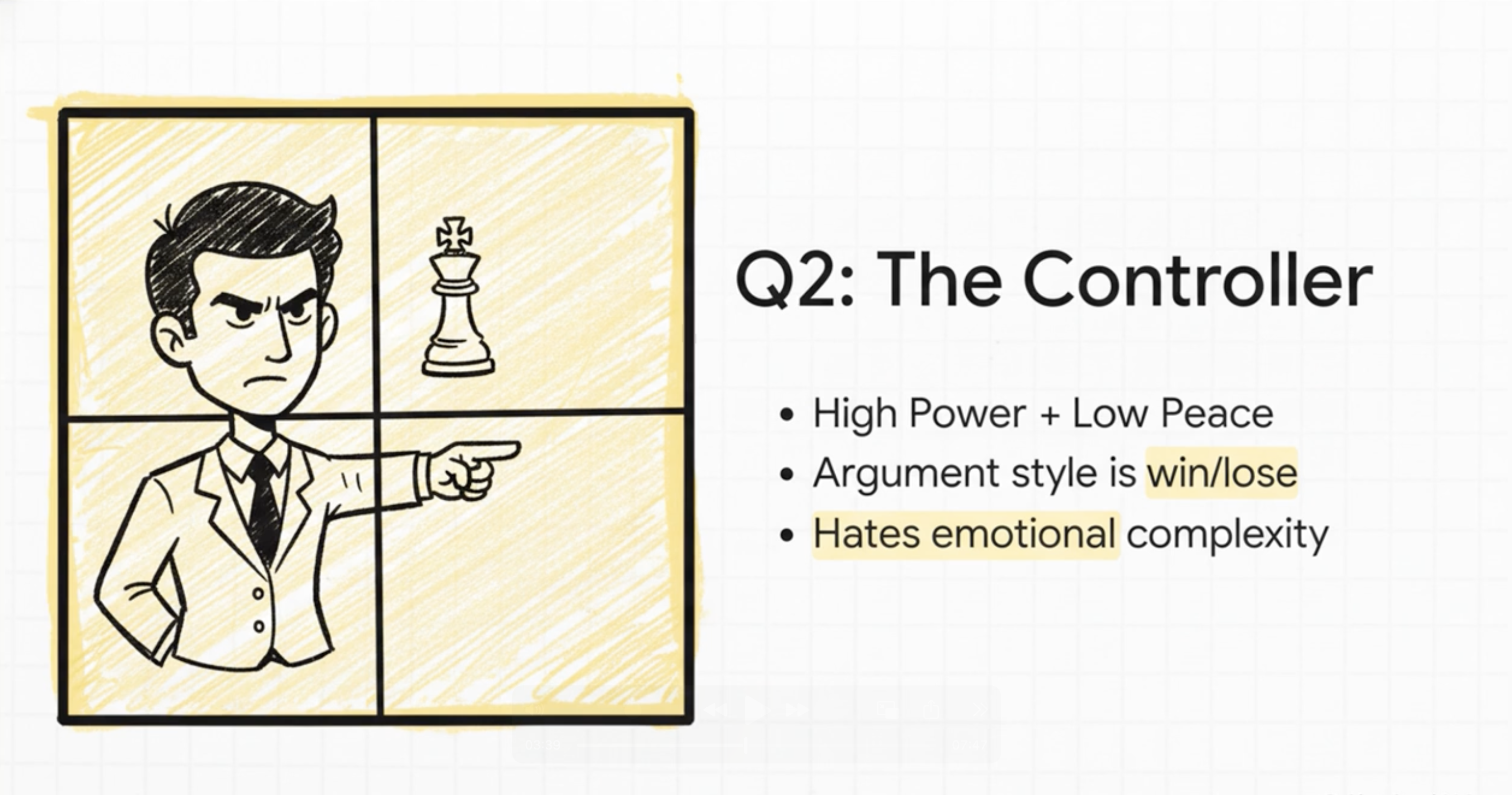
Quadrant 2: High Power + Low Peace = The Controller (stress mode)
Astrology flavour:
- Sun/Mars + Rahu, or Saturn rigidity; benefic support is low
How it looks:
- “I decide.”
- Argument style: win/lose.
- Loves certainty, hates emotional complexity.
Relationship risk:
- Partner becomes scared to disagree.
Balance move:
- Replace commands with options: “We have two good choices - A or B. Which feels better?”
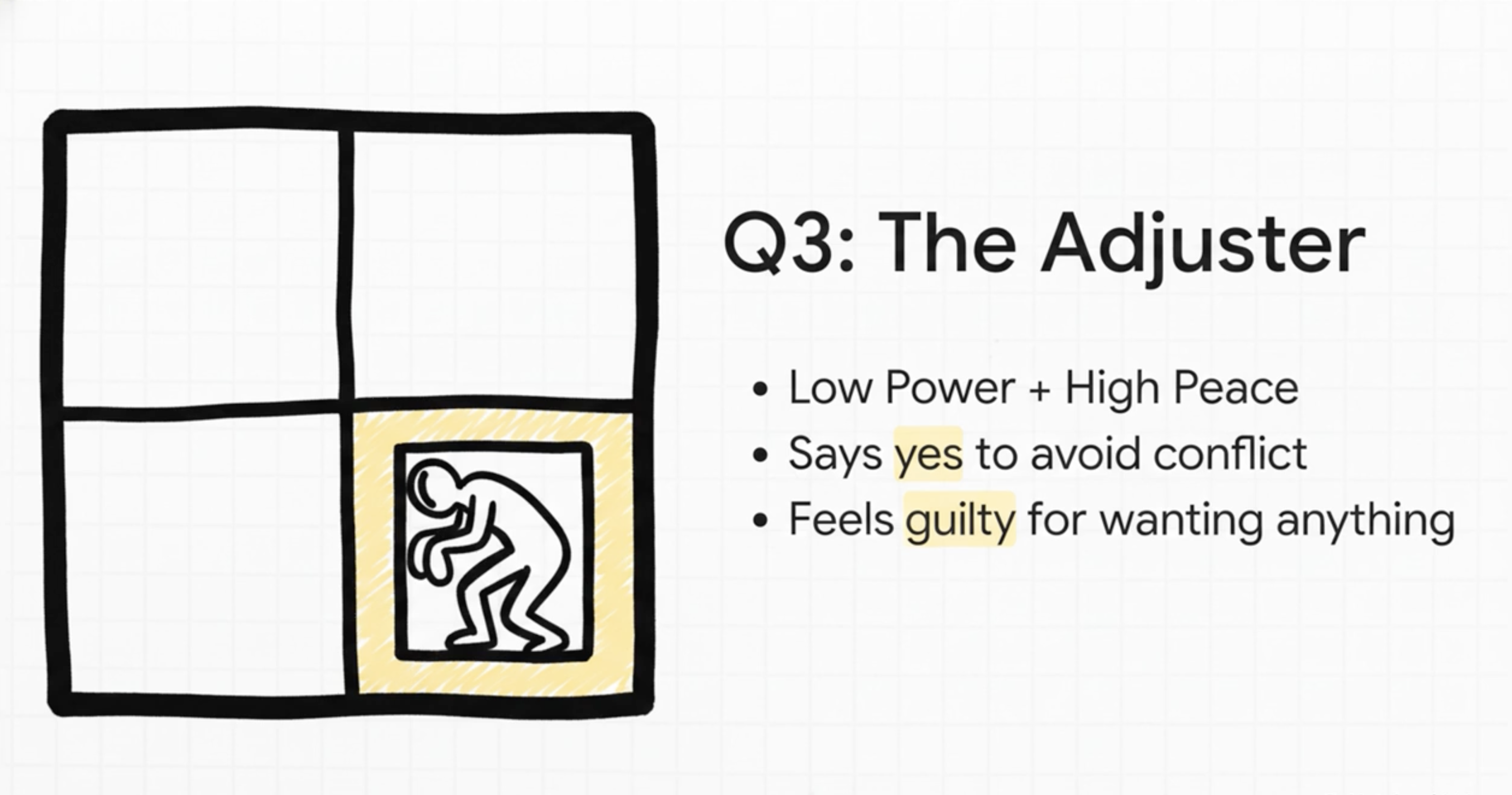
Quadrant 3: Low Power + High Peace = The Adjuster (peacekeeper)
Astrology flavour:
- Moon/Venus sensitive; Saturn fear; Venus debilitated; Moon afflicted
How it looks:
- Says yes quickly.
- Avoids conflict.
- Feels guilty for wanting anything.
Relationship risk:
- Quiet resentment; sudden “I’m done” later.
Balance move:
- Practice small preferences daily: “I’d prefer A today.”
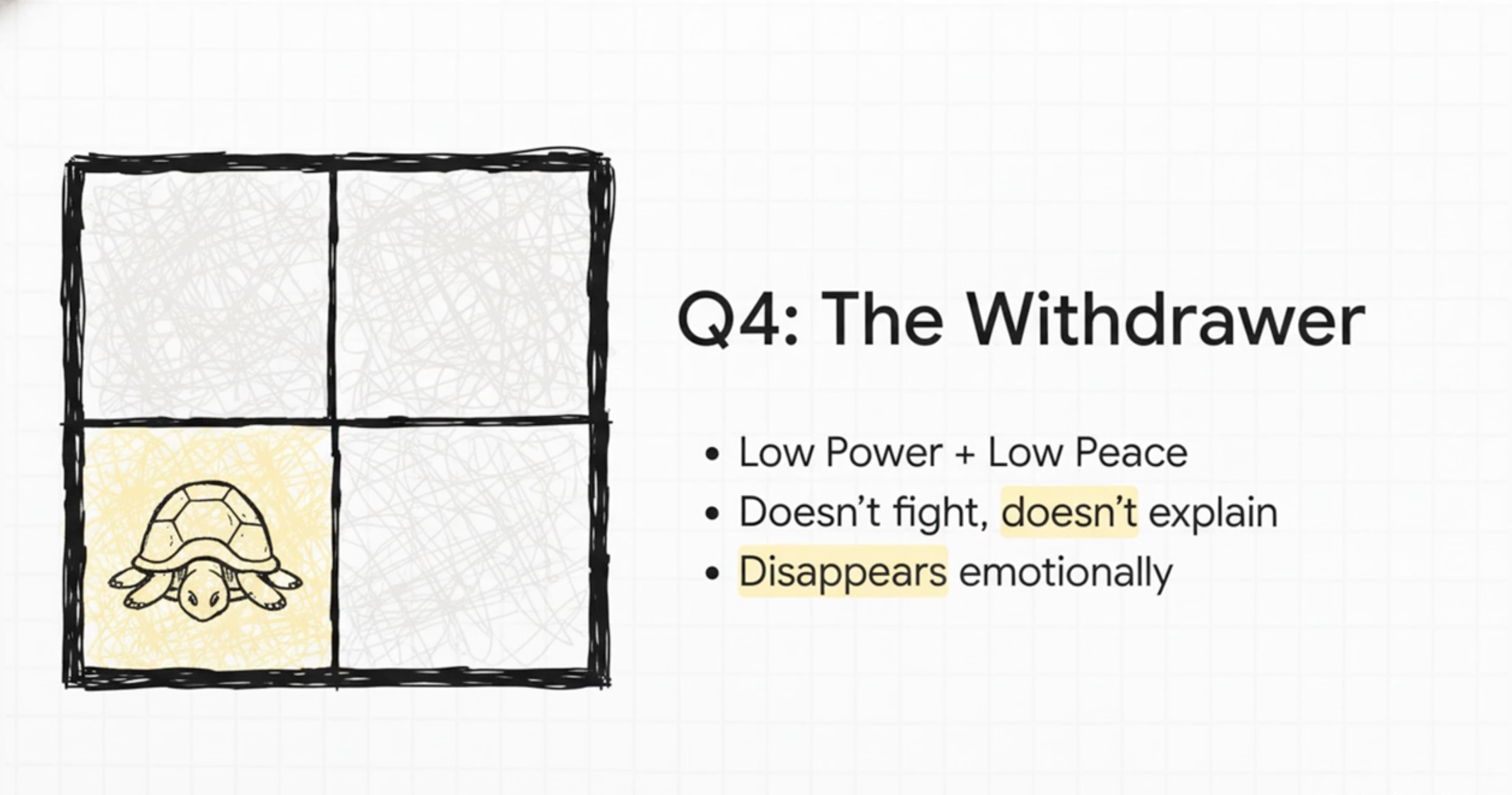
Quadrant 4: Low Power + Low Peace = The Withdrawer
Astrology flavour:
- Ketu influence; Saturn heaviness; Mercury-Ketu; Moon/Ketu
How it looks:
- Doesn’t fight, doesn’t explain.
- Disappears emotionally.
Relationship risk:
- Partner chases; dynamic becomes push–pull.
Balance move:
- Time-outs with return time: “I need 30 minutes. I’m coming back at 8:30.”
This 2×2 is useful because it shows: you’re not “dominant forever.” You’re usually a type under stress.
The most common dominant/submissive loops (and the chart signatures behind them)
Loop 1: Mars pushes, Moon collapses
- One partner argues fast (Mars + Mercury, Mars strong).
- The other partner gets overwhelmed (Moon afflicted), then agrees just to end the fight.
How it feels:
- Dominant partner: “Why won’t you speak clearly?”
- Submissive partner: “Why are you so intense?”
What breaks the loop:
- Fight rules + slower pace.
Related reading: Mars in Relationships: Anger, Boundaries, and Fights
Loop 2: Sun needs respect, Venus keeps peace
- One partner’s identity is linked to authority (Sun strong/afflicted).
- The other partner avoids hurting ego (Venus harmony mode).
How it feels:
- Dominant partner: “You’re disrespecting me.”
- Submissive partner: “I’m just trying to keep us okay.”
What breaks the loop:
- Respect without hierarchy: treat each other like equals.
Related reading: Sun in Relationships: Ego Clashes and Power Struggles
Loop 3: Saturn controls through silence
- Saturn influence can create “coldness as power.”
- One partner delays, withdraws, or becomes rigid.
How it feels:
- Other partner feels punished and becomes more submissive (or starts chasing).
What breaks the loop:
- Emotional timelines + reassurance.
Loop 4: Rahu makes it extreme (tests, jealousy, obsession)
- Rahu on 7th / Rahu with Venus/Moon can turn love into power games.
How it looks:
- “If you love me, prove it.”
- Monitoring, suspicion, dramatic ultimatums.
What breaks the loop:
- Clear boundaries + transparency + slowing the pace.
Houses that amplify power dynamics
1st house (self) vs 7th house (partner)
If the 1st/7th axis is heavily influenced by Sun/Mars/Saturn/Rahu/Ketu, power dynamics become a major life lesson.
- Sun/Mars on 1st: strong identity, strong will.
- Saturn on 7th: relationships feel heavy; control/fear themes.
- Rahu on 7th: obsession, intensity, “fated” pull.
- Ketu on 7th: detachment, emotional distance.
2nd house (speech, family culture)
Many dominant/submissive couples aren’t actually fighting about decisions.
They’re fighting about how they talk.
- Harsh words create submission.
- Silence creates chasing.
- Sarcasm creates insecurity.
If 2nd house/lord is afflicted, “tone” becomes the battlefield.
8th house (power, control, vulnerability)
8th house themes show where you fear losing control.
If the 8th is triggered, you may:
- dominate to avoid vulnerability,
- or submit because you fear abandonment.
How to balance two extremes
Balancing is not about changing your personality.
It’s about upgrading your default planetary behaviour.
If you lean dominant (Sun/Mars/Saturn strong): 5 rules
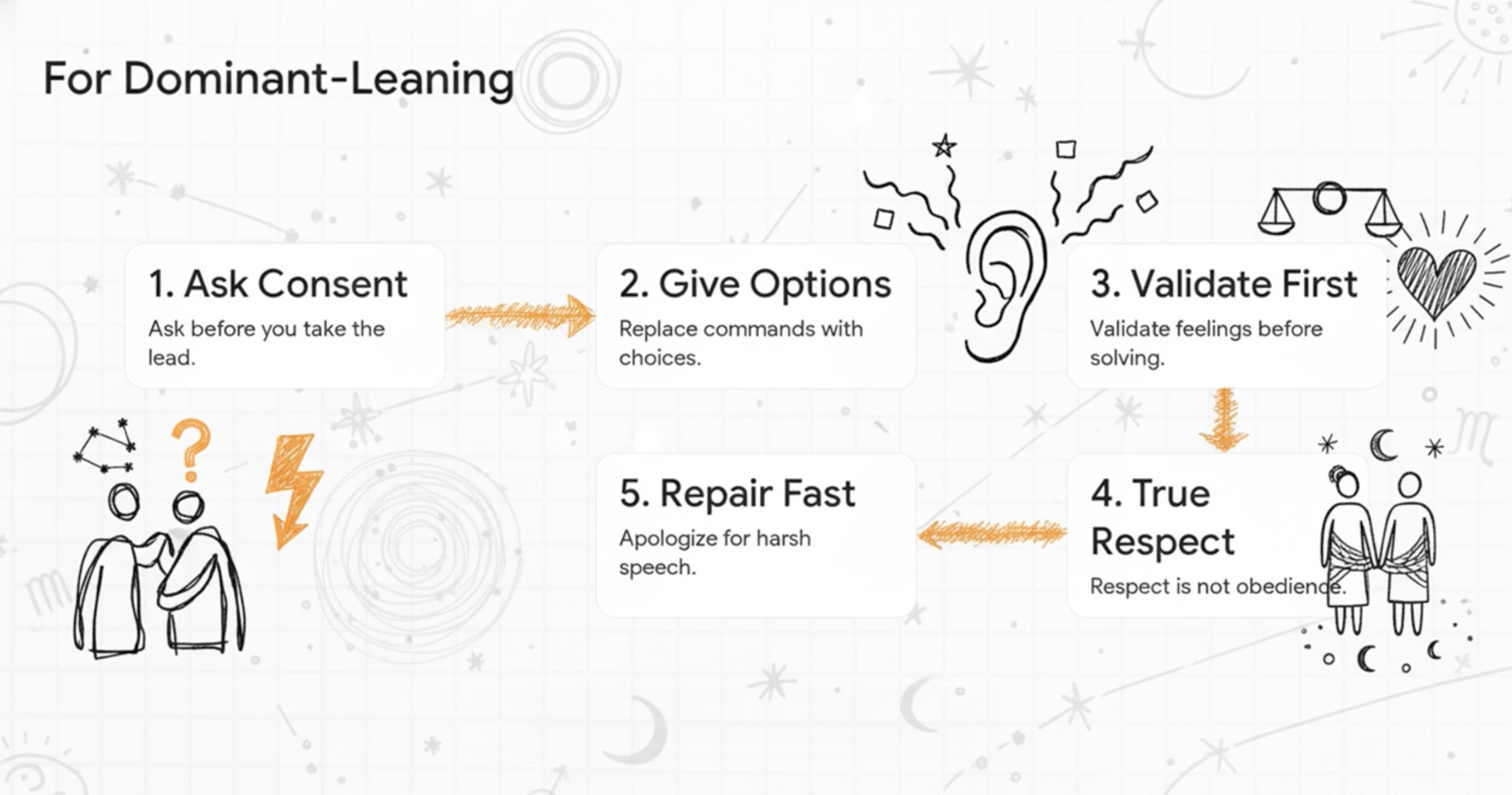
- Ask consent before leading (Sun learns humility)
- “Do you want me to take the lead here, or do you want to decide?”
- Replace commands with options (Mars learns collaboration)
- “Two options: we can do A or B. What do you prefer?”
- Validate emotion before solving (Mercury learns the Moon)
- “I get why you feel that. Now let’s solve it.”
- No ‘respect’ weaponising (Sun affliction repair)
- Respect is not: obedience.
- Respect is: honesty + dignity.
- Repair fast after harsh speech (2nd house hygiene)
- “My tone was wrong. I’m sorry. Let me say it again properly.”
If you lean submissive (Moon/Venus sensitive; fear-based): 5 rules
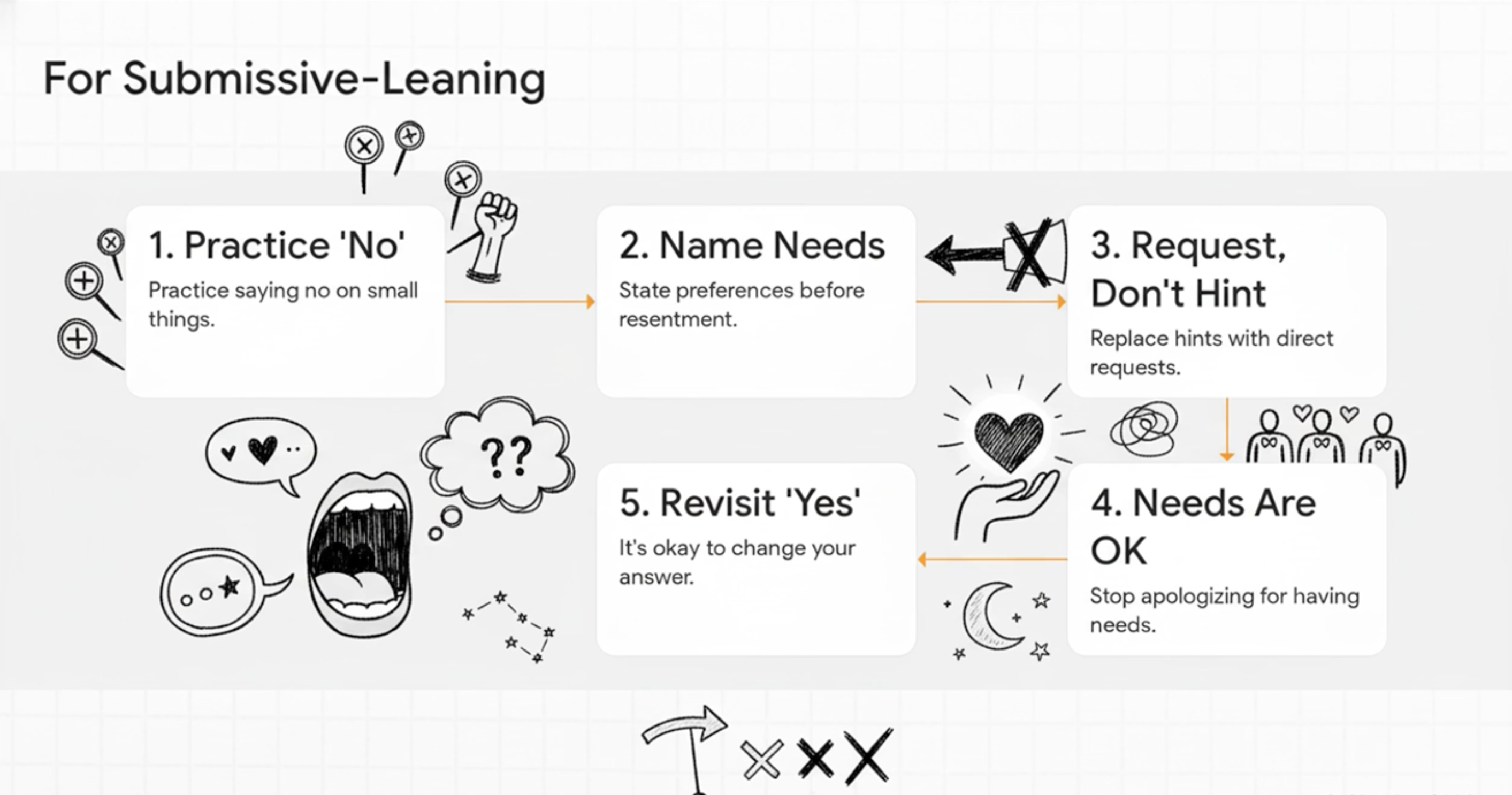
- Practice small no’s (Moon learns safety)
- “No, I’m not okay with that.”
- Name preferences early (before resentment)
- “I’d prefer we do this on Saturday.”
- Replace hints with requests (Mercury clarity)
- “Can you reassure me?” instead of “It’s fine.”
- Stop apologising for having needs (Venus self-worth)
- Needing care is not being “too much.”
- If you agree under pressure, revisit
- “I said yes earlier, but I’ve thought about it. I want to change my answer.”
A shared script for both partners (works in almost every chart)
The Repair Script (simple + powerful):
- “When X happened, I felt Y.”
- “What I needed was Z.”
- “Next time, can we try A?”
This keeps the conversation out of blame and inside repair.
The line between “dynamic” and “danger” (keep it clear)
Astrology can explain patterns - but it should never justify harm.
If dominance includes:
- intimidation,
- isolating you from friends/family,
- controlling money,
- threats,
- fear of disagreeing,
then the issue is not “dominant vs submissive.” It’s unsafe behaviour.
Please seek real-world support.
Closing: your chart shows the pattern; your choices create the balance
Dominant vs submissive dynamics are one of the most common relationship lessons - because love constantly triggers identity (Sun), desire (Mars), fear (Saturn), emotional safety (Moon), and harmony (Venus).
When you understand your chart:
- you stop taking your partner’s style personally,
- you stop repeating the same fight,
- and you learn how to lead without controlling and love without erasing yourself.
If you want a chart-specific read of your relationship power dynamic - why it’s happening, what your chart demands as the lesson, and how to rebalance it in a respectful way - get clarity from a professional.
Consult an expert relationship astrologer