Sometimes it begins in a way that simply feels like love.
You meet someone. The connection feels natural. You feel understood in a way that has been missing for a while. Slowly, without realizing it, their presence starts to shape how you feel day to day.
When they respond warmly, you feel calm.
When they seem distant, your mind starts asking questions.
If plans change or messages slow down, your thoughts begin to spiral.
You’re not trying to be “too much.”
You’re simply trying to feel emotionally secure.
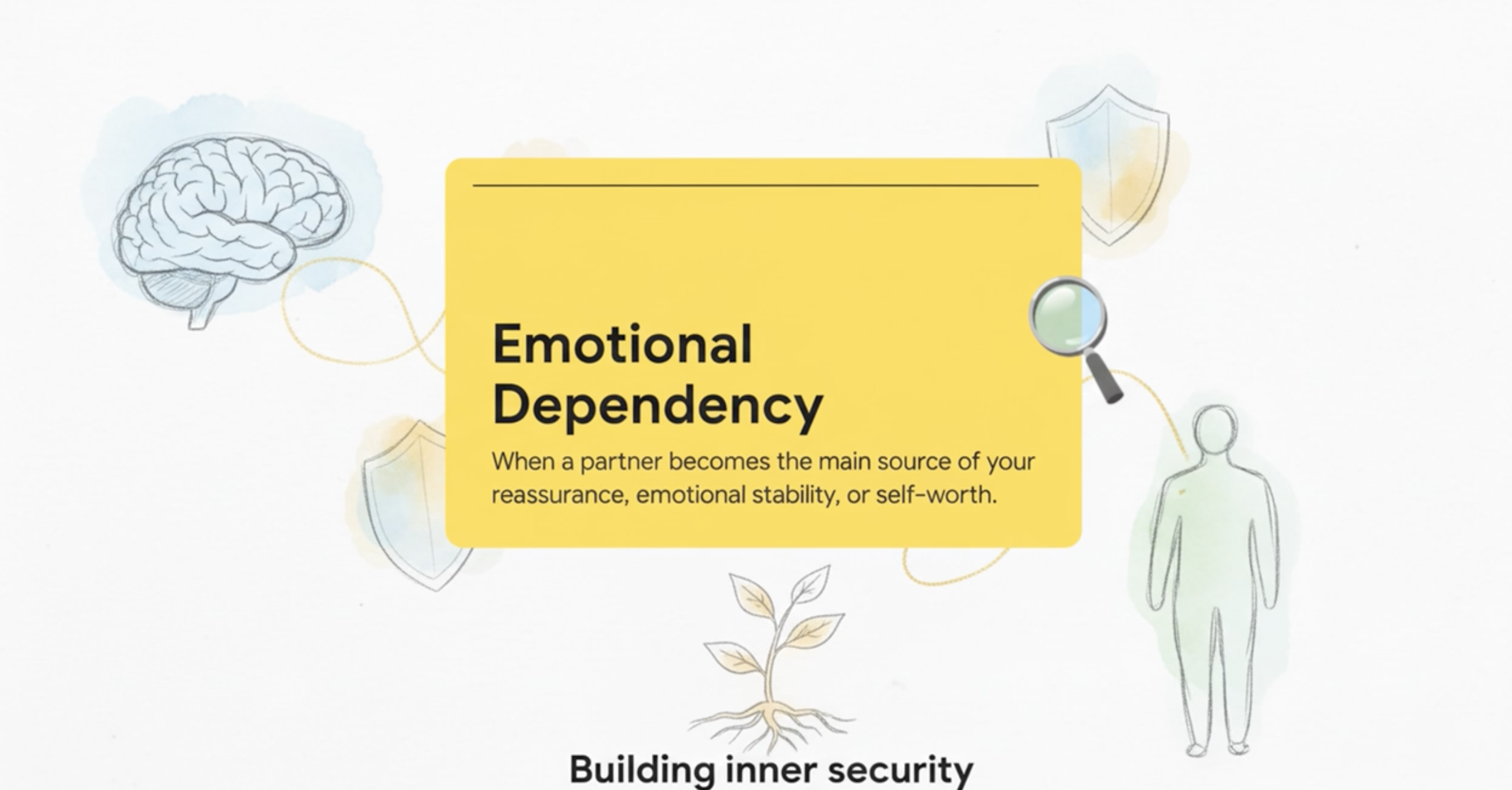
This is what emotional dependency in a relationship often looks like. It happens when a partner becomes the main source of reassurance, emotional stability, or even self-worth.
And if you recognize yourself in this pattern, it doesn’t mean something is wrong with you. It means your mind has learned to attach safety and stability to another person - something many people experience at some point in relationships.
In this article, we’ll explore this pattern from two angles.
First, we’ll look at how emotional dependency shows up in everyday relationship dynamics - the subtle ways it shapes reactions, expectations, and fears.
Then we’ll look at it through a Vedic astrology lens, especially through the Moon, which represents the mind and emotional security in the birth chart. Understanding the Moon can often explain why the mind clings in certain situations and how a person can gradually rebuild emotional steadiness within themselves.
One important note: astrology works best as a map for self-understanding, not as a judgment. It can highlight emotional tendencies and vulnerabilities, but it does not define your fate - and it should never be used to justify unhealthy behavior from anyone else.
1) What emotional dependency feels like (real life)
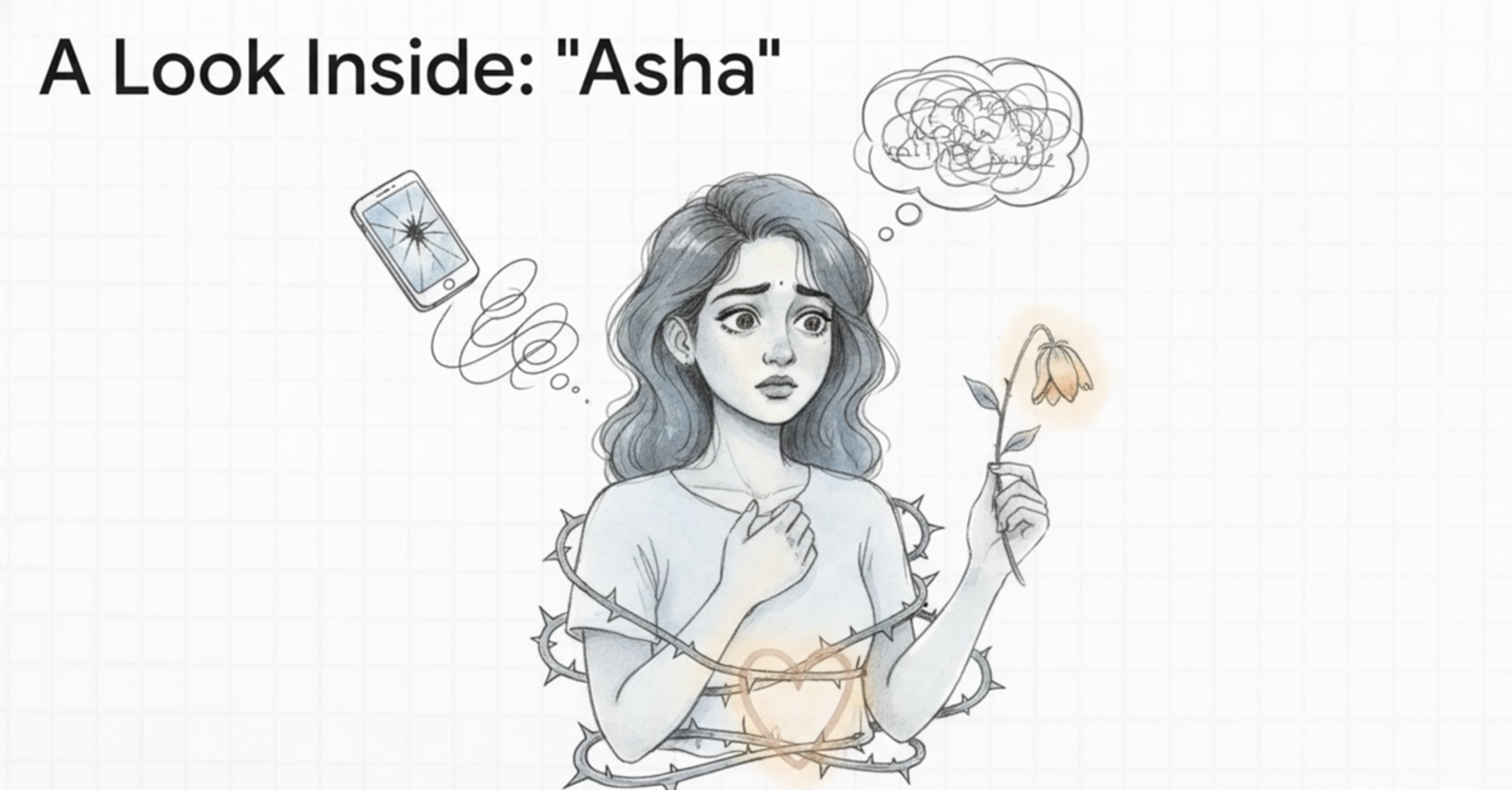
Consider Asha (name changed). She’s smart, capable, and emotionally aware.
Yet in relationships, she becomes a different version of herself:
- She checks her phone every few minutes.
- If her partner’s tone shifts, she replays the conversation for hours.
- She over-explains, over-apologises, and over-gives-just to keep the peace.
- She tells herself, “If I can just be better, they’ll stay.”
From the outside, it can look like “love.” From the inside, it feels like anxious survival.
Emotional dependency often carries a specific ache:
- fear of abandonment (even when nothing “big” happened)
- emptiness when you’re not connected
- urgency to fix, chase, or prove your value
- a belief that your emotions are not safe unless someone else is close
Healing begins when we shift the question from “What’s wrong with me?” to “What inside me feels unsafe-and how do I build safety?”
2) Signs you might be emotionally dependent (a self-check)
Emotional dependency exists on a spectrum. You don’t need all of these for the pattern to matter.
Self-check questions
- Do you feel anxious or low when your partner is busy, quiet, or needs space?
- Do you need frequent reassurance (texts, calls, “are we okay?”) to feel calm?
- Do you fear conflict so much that you silence your needs?
- Do you over-give (time, money, emotional labour) to “earn” love?
- Do you feel like you’re not fully yourself unless you’re in a relationship?
- Do you tolerate behaviour that hurts you because leaving feels unbearable?
- Do you obsess over what they think of you-more than what you think of you?
- Do you confuse intensity with intimacy?
A simple litmus test
If love feels like:
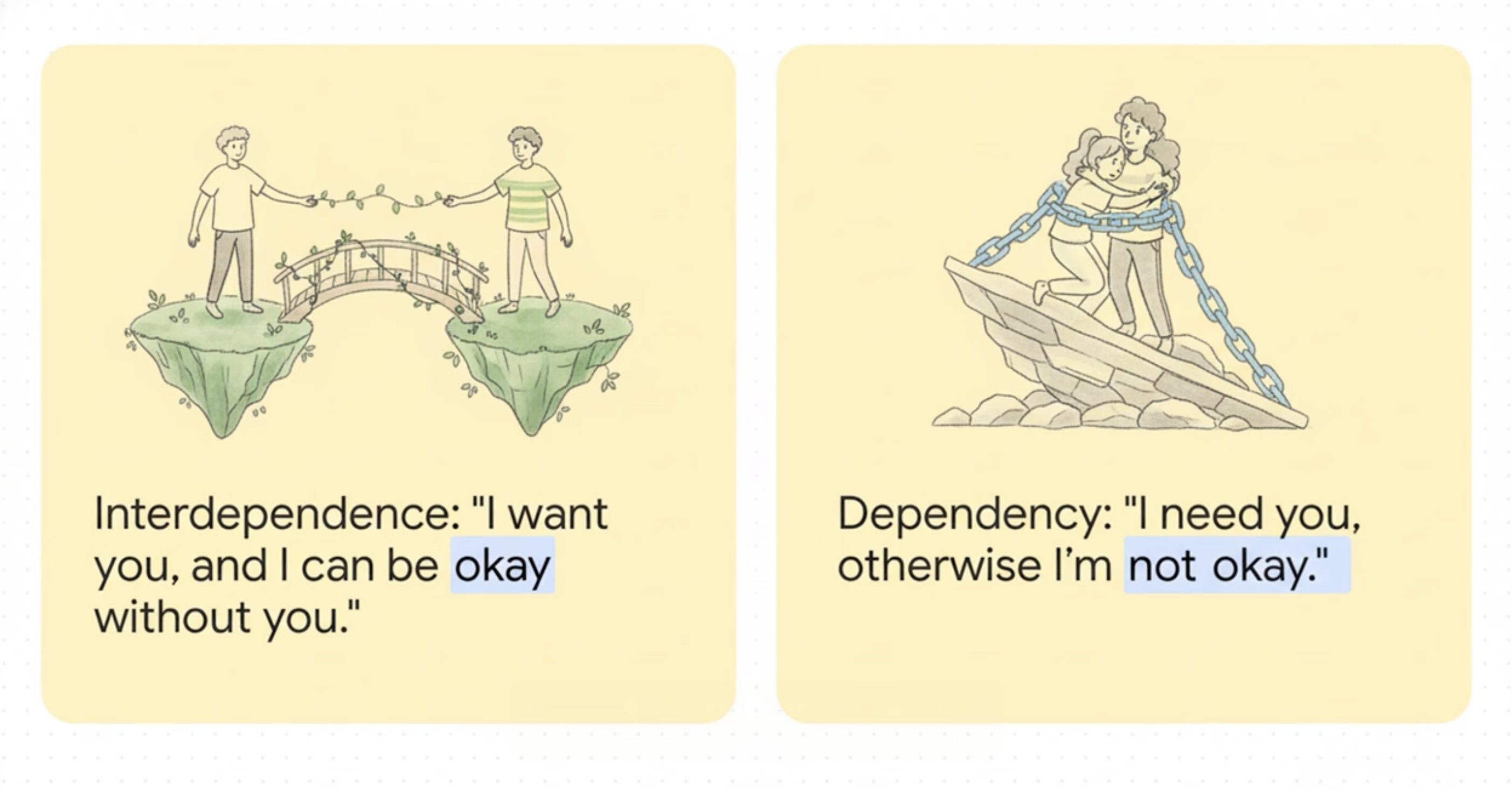
- safety + freedom → interdependence
- panic + urgency → dependency
Interdependence is “I want you, and I can be okay without you.” Dependency is “I need you, otherwise I’m not okay.”
3) The Vedic astrology lens: why Moon matters here
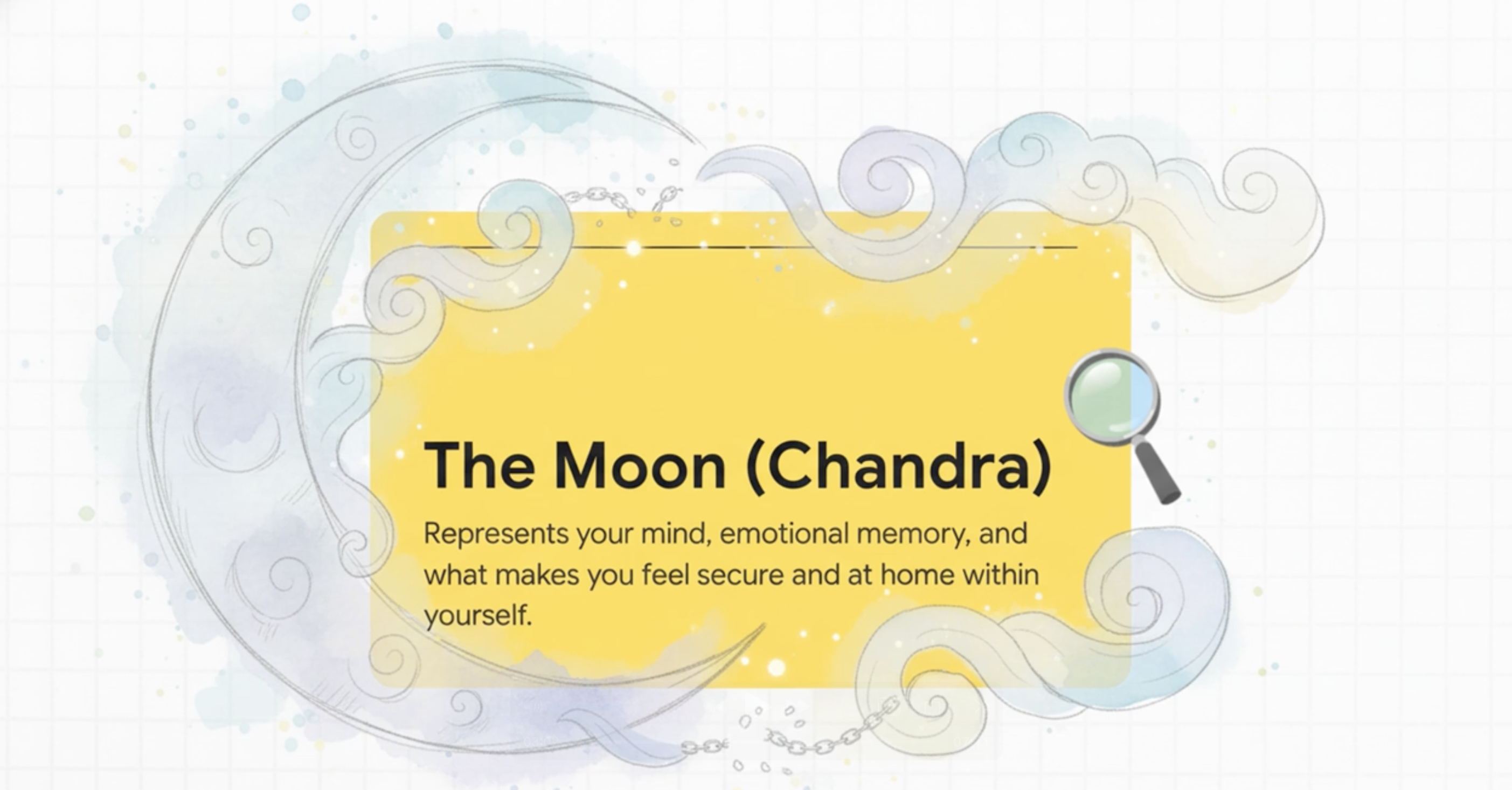
In Vedic astrology, the Moon is a primary indicator of:
- mind and emotional memory
- what feels like “home” inside you
- instinctive needs and how you self-soothe
- sensitivity to rejection, closeness, and separation
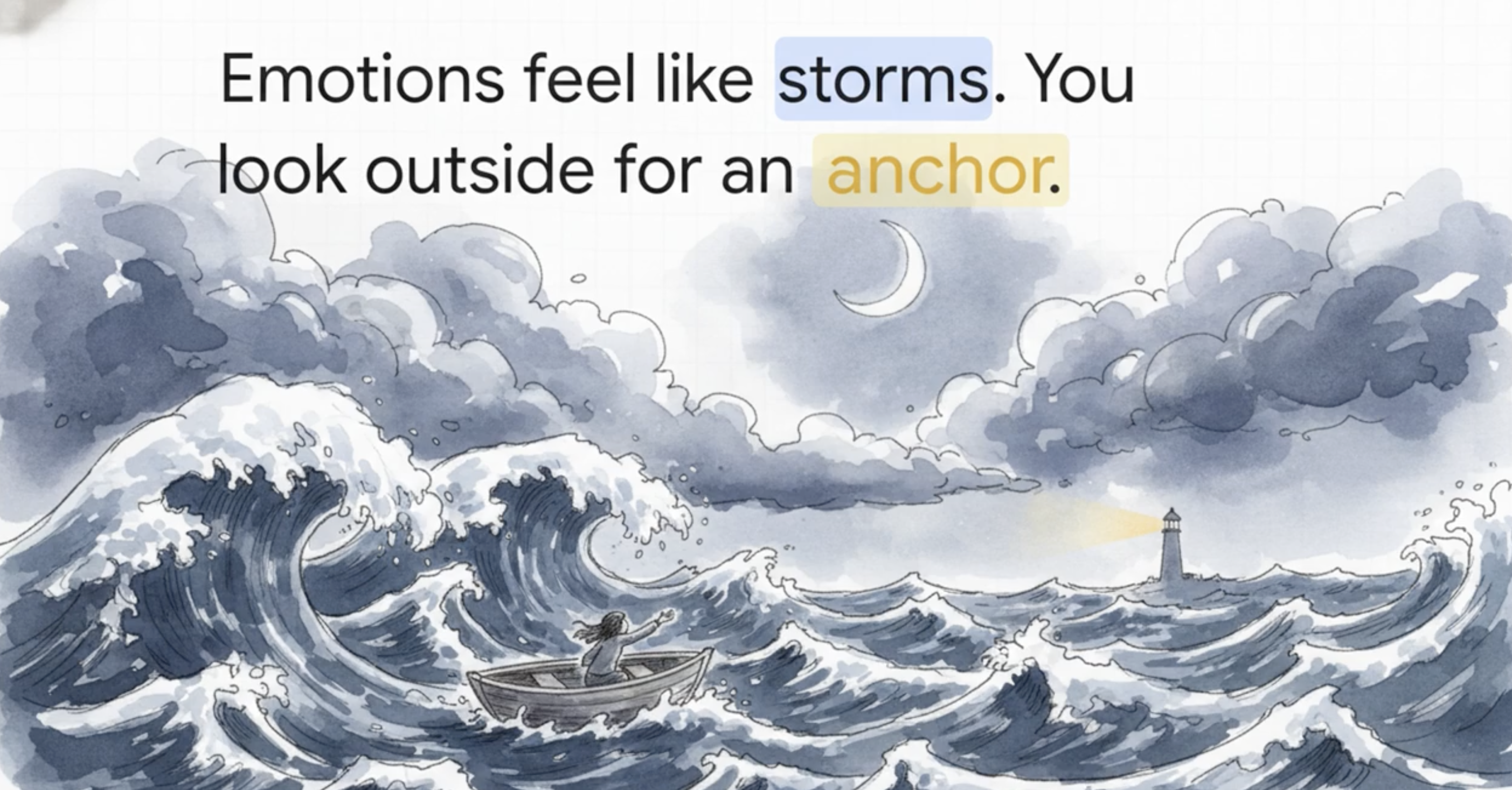
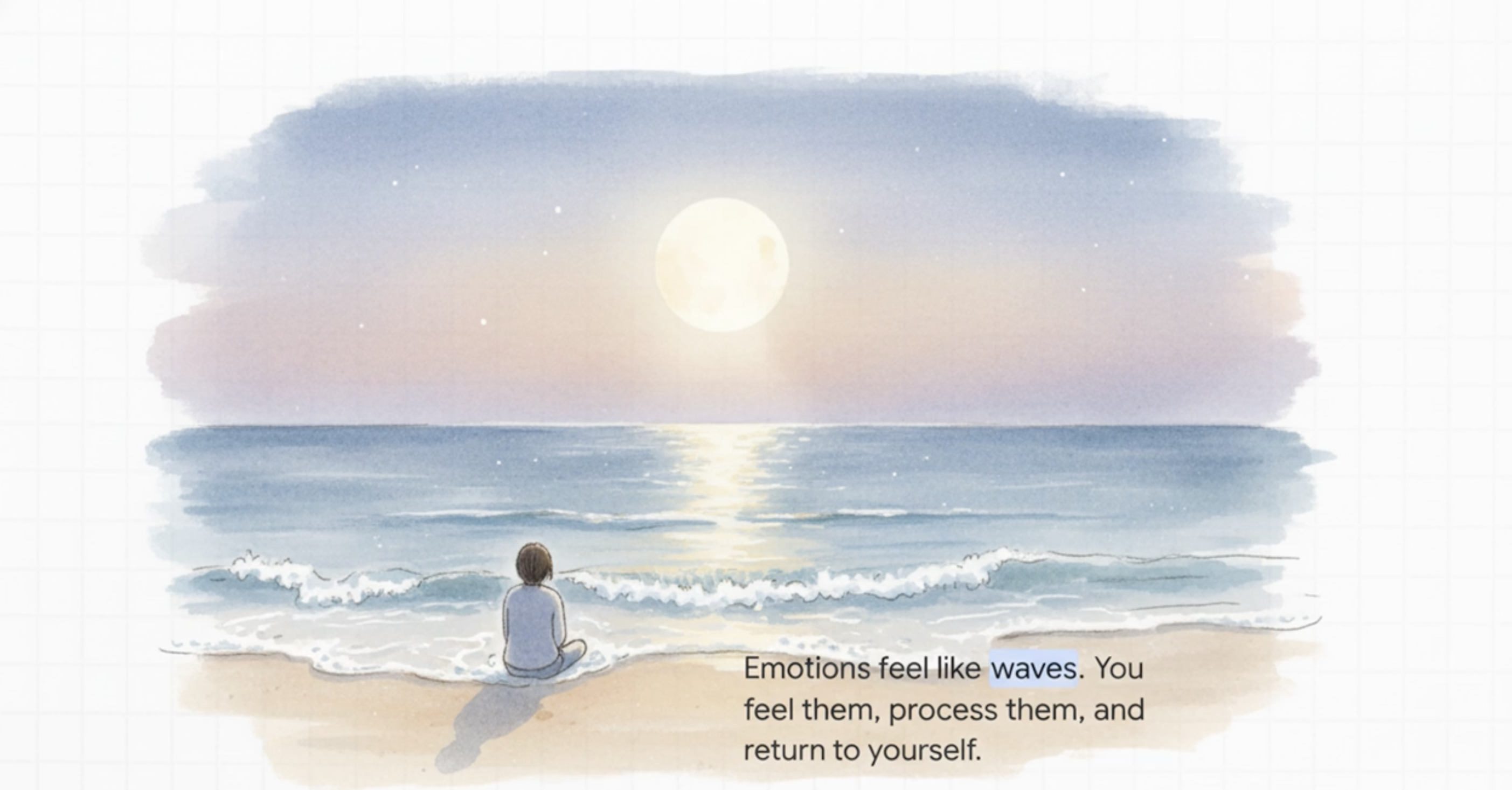
If the Moon is steady and supported, emotions move like waves-you feel them, you process them, you return to yourself.
If the Moon is vulnerable or heavily stressed, emotions can feel like storms-you look outside for an anchor.
This is why, in a Moon-centric reading, emotional dependency is often understood as:
“The mind is seeking emotional safety outside because it doesn’t feel enough inside.”
Important nuance:
- We don’t diagnose your relationships from one placement.
- We don’t label you as “clingy forever.”
- We look for patterns: Moon strength, Moon afflictions, and repetition.
4) What makes the Moon feel “weak” (and how dependency shows up)
When you say “weak Moon,” you’re not saying a person is weak.
You’re saying: the emotional baseline is more sensitive, more easily triggered, and more likely to seek external reassurance.
Below are common Vedic patterns astrologers look at. Treat them as clues, not verdicts.
4.1 Moon debilitated in Scorpio (emotional intensity + trust wounds)
In Vedic thought, the Moon is debilitated in Scorpio. In real life, this can show up as:
- deep bonding needs
- strong emotional memory (you don’t “move on” easily)
- fear of betrayal or loss
- a tendency to hold pain privately… until it overflows
In relationships, this can become dependency when the mind says:
- “If I lose them, I’ll fall apart.”
- “If they pull away, I must fix it immediately.”
What helps: pacing intimacy, building emotional containment, and creating stability outside the relationship.
4.2 Moon afflicted by malefics (Saturn/Mars influence)
When Saturn or Mars influences the Moon through conjunction/aspect (or the Moon is heavily pressured), common experiences include:
- Saturn tone: heaviness, loneliness, worry, emotional dryness
- Mars tone: irritability, reactivity, quick emotional fires
In relationships:
- Saturn-Moon can overthink silence and assume rejection.
- Mars-Moon can fight to feel connected.
What helps: structure + routines, and learning to respond after a pause (instead of reacting immediately).
4.3 Moon hemmed (Papakartari) or “boxed in”
When the Moon feels boxed in, the mind can feel like it has no space.
In modern life this often shows as:
- overdependence on one person for relief
- difficulty tolerating uncertainty
- fear of being alone with your own thoughts
What helps: widening support systems + building a small daily self-soothing ritual.
4.4 Moon–Rahu close conjunction (grahan-like emotional hunger)
A close Moon–Rahu conjunction is often described with an eclipse (grahan) metaphor: Rahu amplifies craving; Moon seeks comfort.
This can show up as:
- obsession loops (thinking about someone constantly)
- difficulty separating intuition from anxiety
- idealising a partner, then crashing into doubt
- a restless “more, more, more” emotional hunger
What helps: grounding, reality-checking, and learning to create safety before seeking reassurance.
4.5 Waning Moon + afflictions (lower emotional stamina)
A waning Moon can be more vulnerable-especially when combined with afflictions.
This can show as:
- mood dips
- sensitivity to rejection
- quick spiral when plans change
What helps: baseline maintenance-sleep, food, routines-so triggers don’t become storms.
4.6 Moon tied to 6/8/12 houses (stress/leakage themes)
When the Moon is strongly tied to 6/8/12 themes, it can show:
- emotional drain
- fear of loss/uncertainty
- subconscious attachment wounds surfacing in intimacy
- escapism (doomscrolling, fantasy, numbing)
What helps: grounding practices and clear boundaries-so intensity doesn’t become self-abandonment.
5) What to do
The goal isn’t to become “emotionless.”
The goal is to become emotionally held by yourself, so love becomes a choice-not a survival strategy.
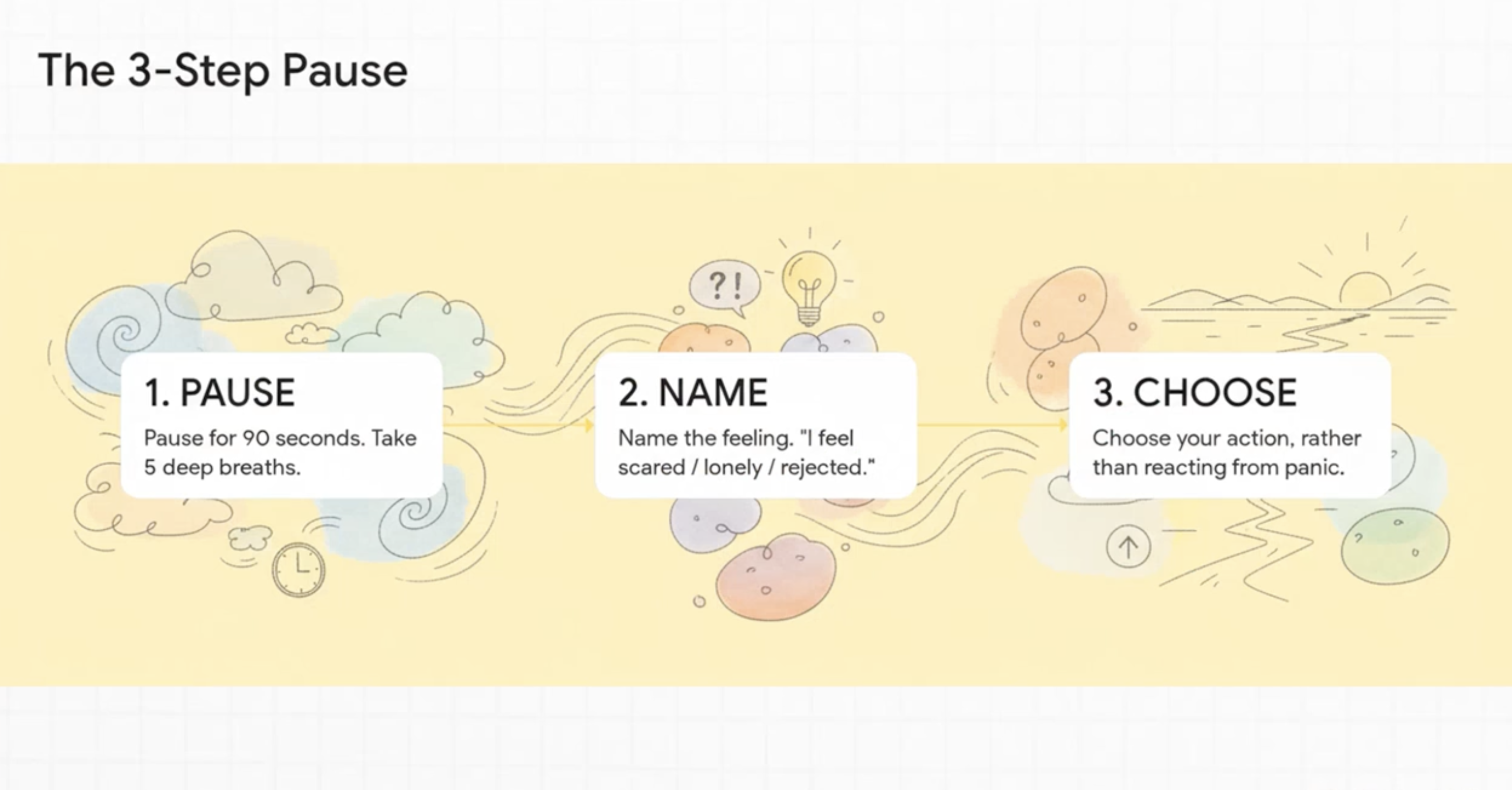
5.1 The “pause before reassurance” rule (most important)
If you feel the urge to text/call to fix anxiety:
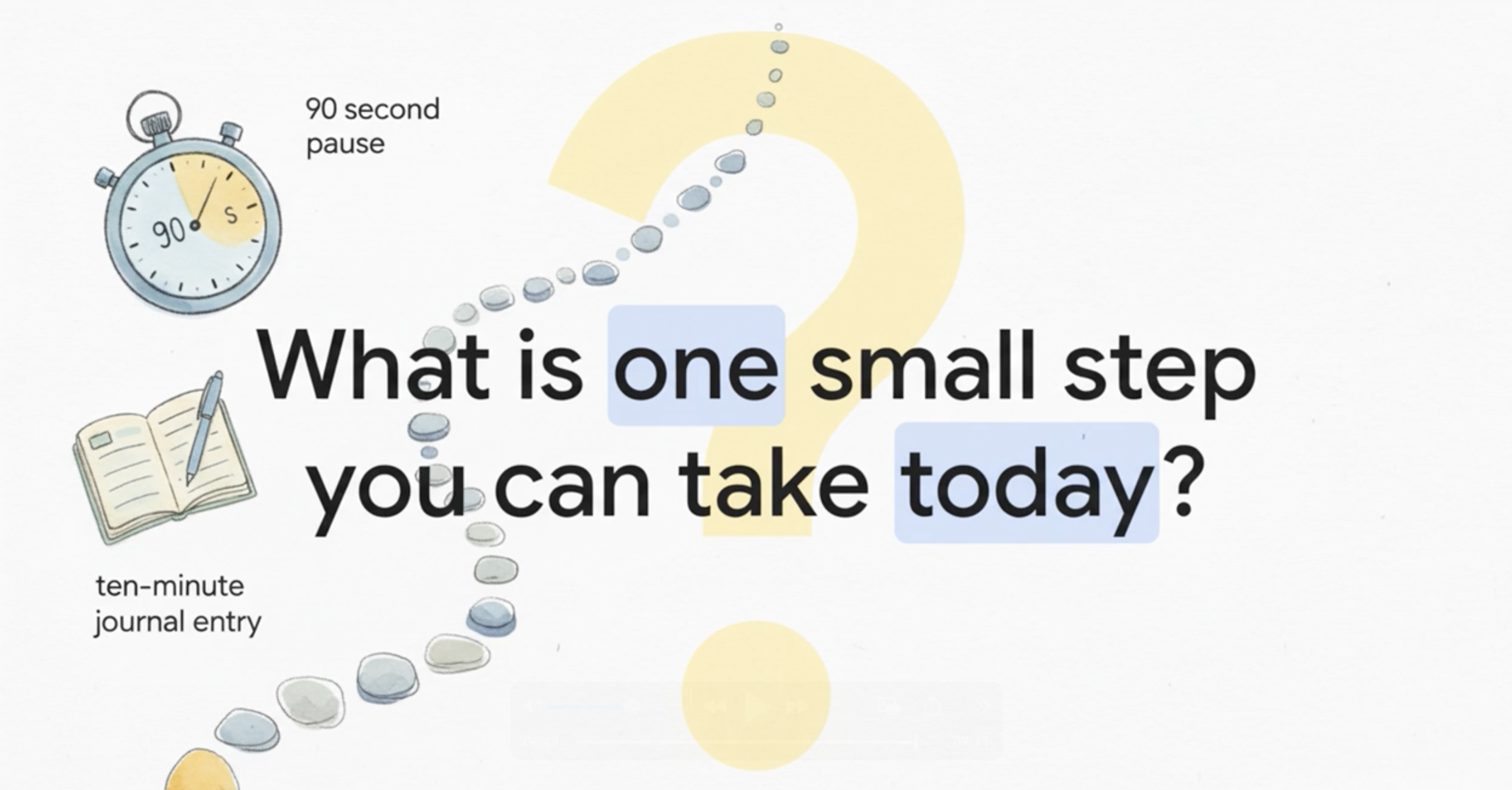
- Pause for 90 seconds.
- Do 5 breaths: inhale 4, exhale 6.
- Name the feeling: “I feel scared / lonely / rejected.”
- Then choose your action.
This simple pause changes everything because it moves you from panic to choice.
5.2 Daily Moon-strength routine (simple, sustainable)
Pick 2–3 and do them daily for 21 days:
- sleep at a consistent time (your Moon loves rhythm)
- morning sunlight or a short walk
- warm food + protein (stability for emotions)
- 10-minute journaling: “What am I afraid will happen?”
- reduce late-night scrolling (it directly worsens Moon–Rahu style loops)
5.3 Relationship practices (so closeness doesn’t become merging)
- Keep 2–3 routines that are yours (friends, hobby, family time, gym/class)
- Move slowly in commitment. Consistency over intensity.
- Don’t overgive to “earn” love. Give from choice.
A healthy relationship can handle pacing.
5.4 Clean communication scripts (no begging, no testing)
Use simple, non-accusing language:
- Reassurance (clean): “Hey, I’m feeling anxious today. Could you reassure me about us? A quick message helps me settle.”
- Clarity on plans: “I get unsettled when plans are uncertain. Can we decide by tonight whether we’re meeting tomorrow?”
- Offline expectation: “When replies are delayed, my mind creates stories. It helps if you tell me when you’ll be offline.”
5.5 Vedic remedies (supportive, not magical)
Remedies work best when you treat them as habits of emotional stability, not superstition.
Choose what resonates:
- Monday as a “Moon day”: gentler schedule, earlier sleep, emotional reset
- spend a few minutes near water (bath, sea, even mindful water ritual at home)
- simple mantra practice (if you already do it): “Om Som Somaya Namah” (calm repetition)
- acts of care for mother figures / nurturing energy (where appropriate)
- donate white items (milk/rice) occasionally as a ritual of steadiness and gratitude
If you do remedies but keep chaotic relationship behavior, remedies won’t help. Your actions are the real remedy.
6) A gentle close: you’re allowed to heal without becoming cold
One fear many people have is:
“If I stop needing them, will I stop loving them?”
Usually the opposite happens.
When your inner Moon feels steadier-when you can hold your feelings and ask for what you need without panic-love becomes less like gripping and more like offering.
You don’t become detached. You become secure.
If you’d like a compassionate, Moon-centric Vedic reading focused on emotional patterns (not fear), you can speak to a trusted astrologer here:
Explore expert relationship astrologers: /astrologers?utm_source=blog&utm_medium=cta&utm_campaign=march_2026