Mauni Amavasya is 2026’s first and very auspicious Amavasya. We will discuss the importance of the Mauni Amavasya and the important time and tithi.
Mauni Amavasya kab hai? (When is Mauni Amavasya) - Mauni Amavaysa Tithi
- Amavasya Tithi begins: 12:03 AM on January 18, 2026
- Amavasya Tithi ends: 01:21 AM on January 19, 2026
- Practical note: The main daytime observance for Mauni Amavasya 2026 will be on Sunday, January 18, 2026, during the active Tithi.
.png)
Mauni Amavasya kya hota hai? (What is Mauni Amavasya?)
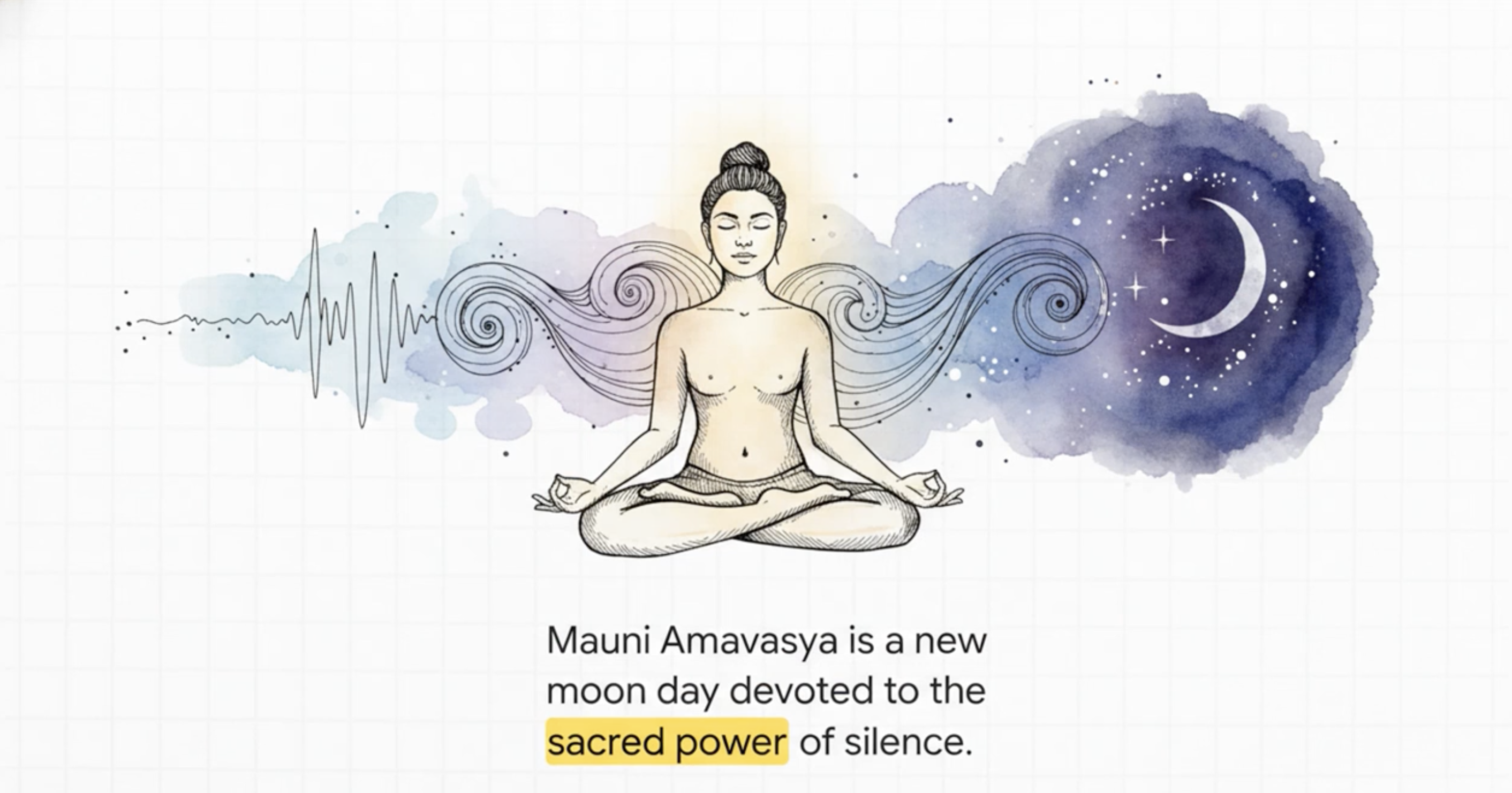
Mauni Amavasya is the new moon day in the Hindu month of Magha (roughly January–February) devoted to silence (maun), inner purification, snan-daan (holy bath and charity), and prayer. “Mauni” comes from “mauna” meaning silence; “Amavasya” is the lunar new moon. The day is especially revered at sacred confluences like Prayagraj during the Magh Mela, where devotees take a holy dip at dawn, observe a maun vrat (vow of silence), and offer charity.
Mauni Amavasya par kya karna hai? (What to do Mauni Amavasya?)
You need to practice Maun or Silence.
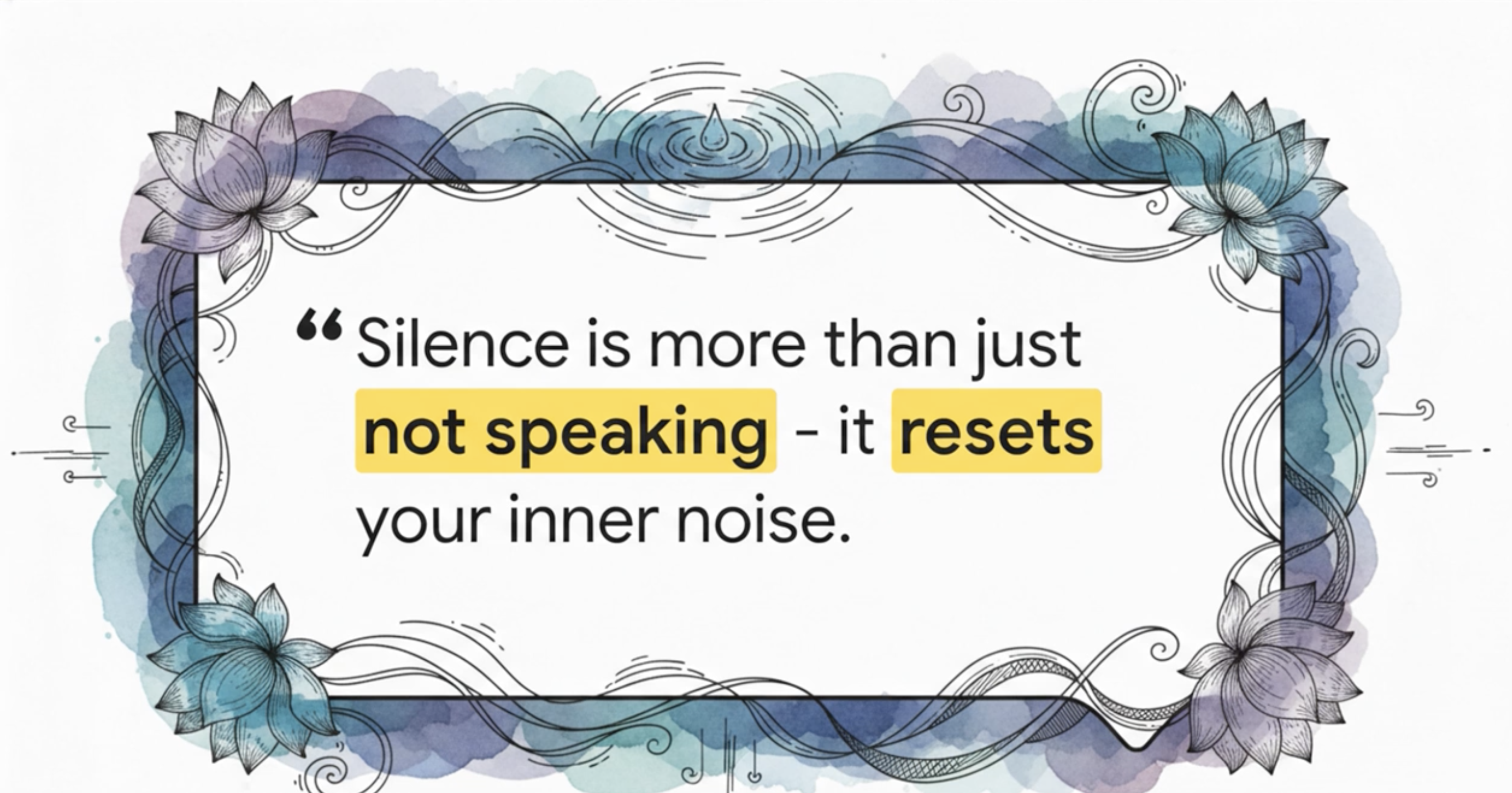
Because silence is more than just not speaking - it resets your inner noise. By choosing quietude for a few hours or the whole day, you give the mind a chance to declutter. That, paired with snan-daan and prayer, turns Mauni Amavasya into a potent day for reflection, gratitude, and spiritual progress.
When is Mauni Amavasya 2026? (Mauni Amavasya kab hai?)

- Amavasya January 2026 Tithi: Starts 12:03 AM on January 18, 2026 and ends 01:21 AM on January 19, 2026.
- Most households will observe Mauni Amavasya on Sunday, January 18, 2026 during daylight, aligning the main rituals - snan, maun vrat, daan, and puja - with the active Tithi.
Mauni Amavasya kya hai? (Mauni Amavasya meaning)
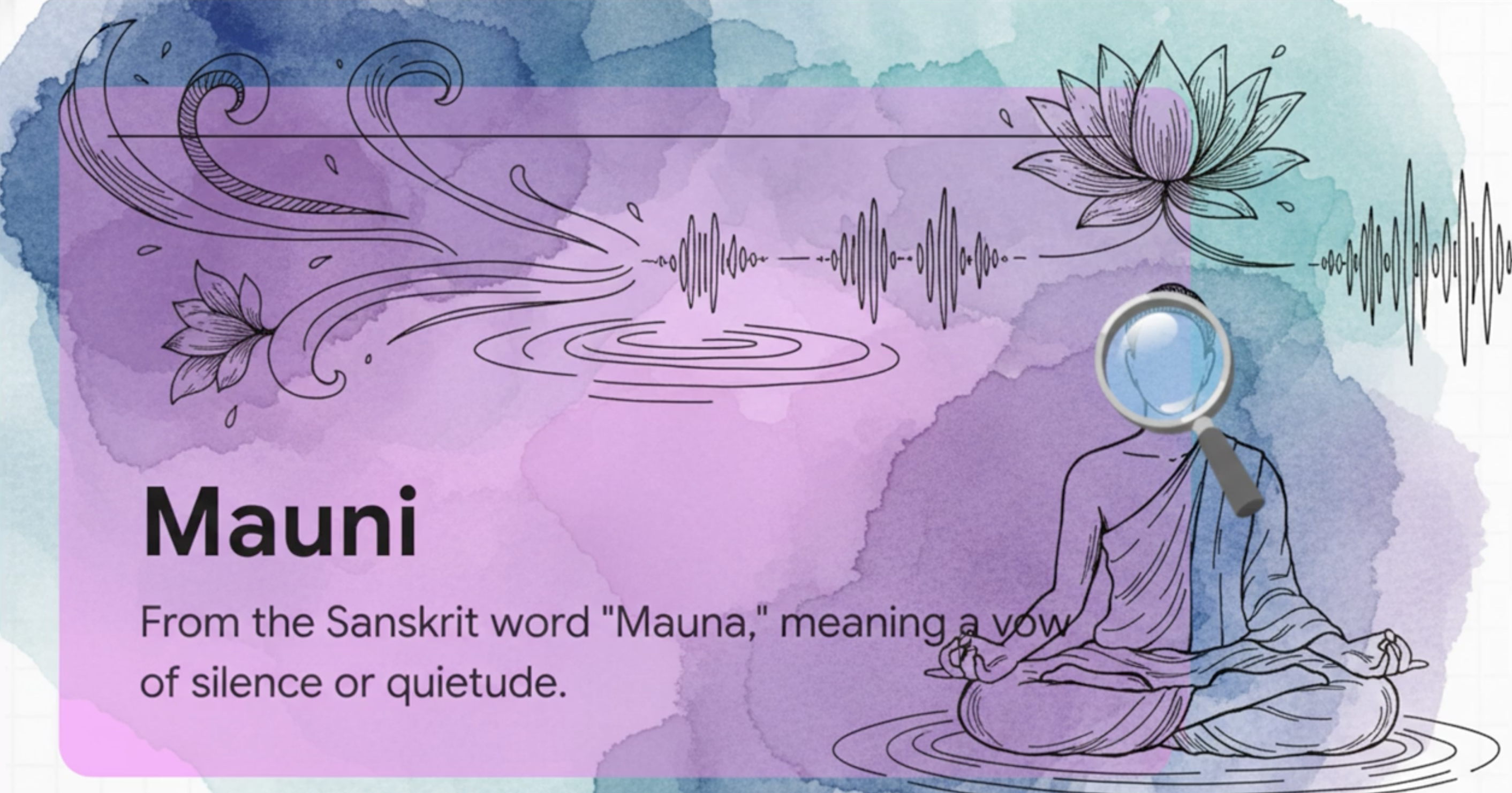
At its heart, Mauni Amavasya is about pausing to listen - to your breath, your intentions, and your conscience. The symbolic new moon suggests a clean slate. The silence (maun) conserves mental energy and channels it inward; the snan purifies; the daan softens the ego; the prayers uplift. Together, they cultivate sattva - clarity, calm, and compassion.
Mauni Amavasya ka Mahatva (Significance of Mauni Amavasya)
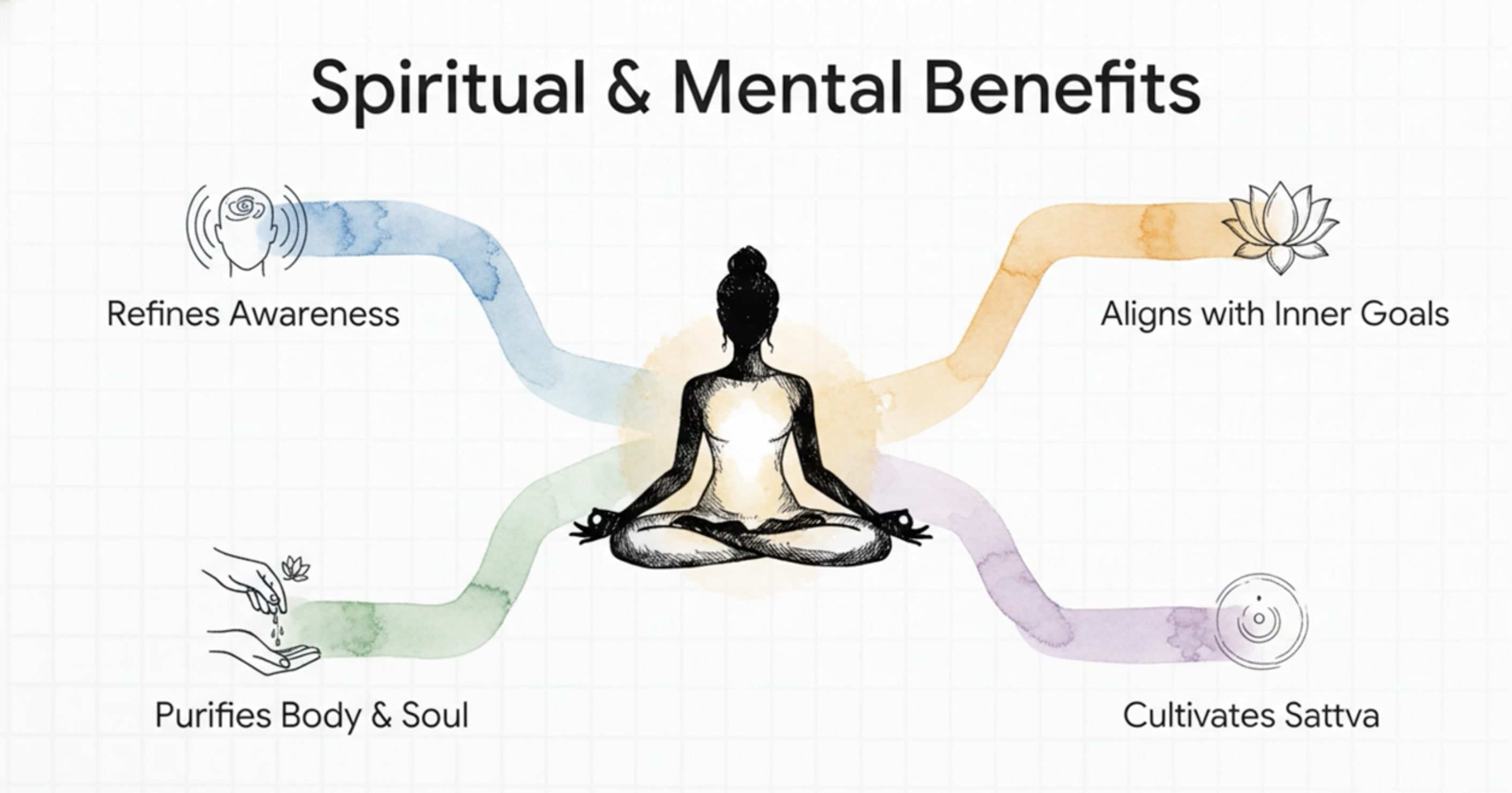
Silence refines awareness: A maun vrat is like a mini-retreat. It reduces impulsive speech, curbs reactivity, and makes meditation smoother.
- Snan-daan purifies: A dawn bath - ideally in a river or at home with a few drops of Ganga jal - paired with charity is considered deeply meritorious. Traditional guidance aligns Amavasya with purification through worship and giving, and many households also remember their ancestors (Pitru karya) on Amavasya.
- Alignment with inner goals: The quiet energy of the new moon is perfect for introspection, gratitude lists, and setting sankalpas you’ll actually keep.
- Community and compassion: Donating food, sesame (til), grains, blankets, or supporting a community kitchen embodies the spirit of the day - helping those in need while softening personal attachments.
Rituals for Mauni Amavasya
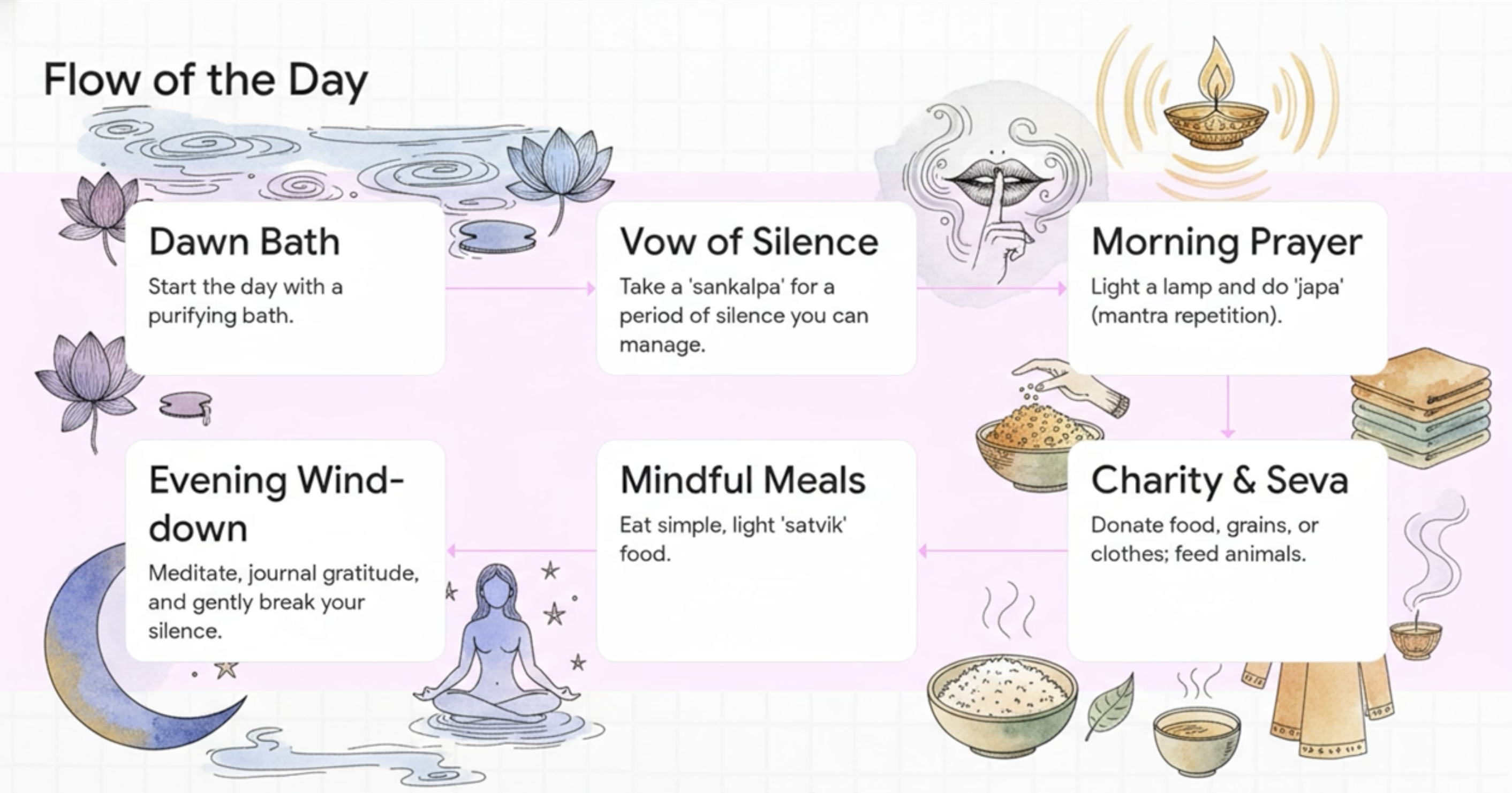
- Wake early, tidy your space, and bathe. If you have Ganga jal, add a few drops to the bath water.
- Take a sankalpa for maun vrat. Decide how long you’ll keep silence - half day, full day, or a defined window.
- Keep a small notepad for absolute necessities; otherwise avoid speaking and texting.
Morning puja
- Light a diya in your puja corner. Offer flowers, water, and a small satvik naivedya to your Ishta Devata.
- Do japa of a simple mantra - Om Namah Shivaya, Om Namo Narayanaya, Gayatri, or your chosen mantra. If you sing aarti, keep your voice soft and mind anchored.
Snan-daan and seva
- If you can, feed someone - humans or animals. Offer food to birds, donate a blanket, give sesame or grains, or support a local kitchen.
- If you remember your ancestors, do so with a diya and water offering, and a short prayer for their peace.
Food and conduct
- If fasting, choose a light, mindful fast as your health allows; otherwise eat simple satvik meals (khichdi, fruits, milk, or light vegetables).
- Avoid alcohol, meat, garlic-onion if you prefer satvik norms, and steer clear of gossip, arguments, and noise.
Evening wind-down
- Meditate for 10–20 minutes at sunset. Write a short gratitude note. If you kept a full-day maun, break it gently with a prayer or mantra, and a few sips of warm water.
Dos and Don’ts on Mauni Amavasya Do
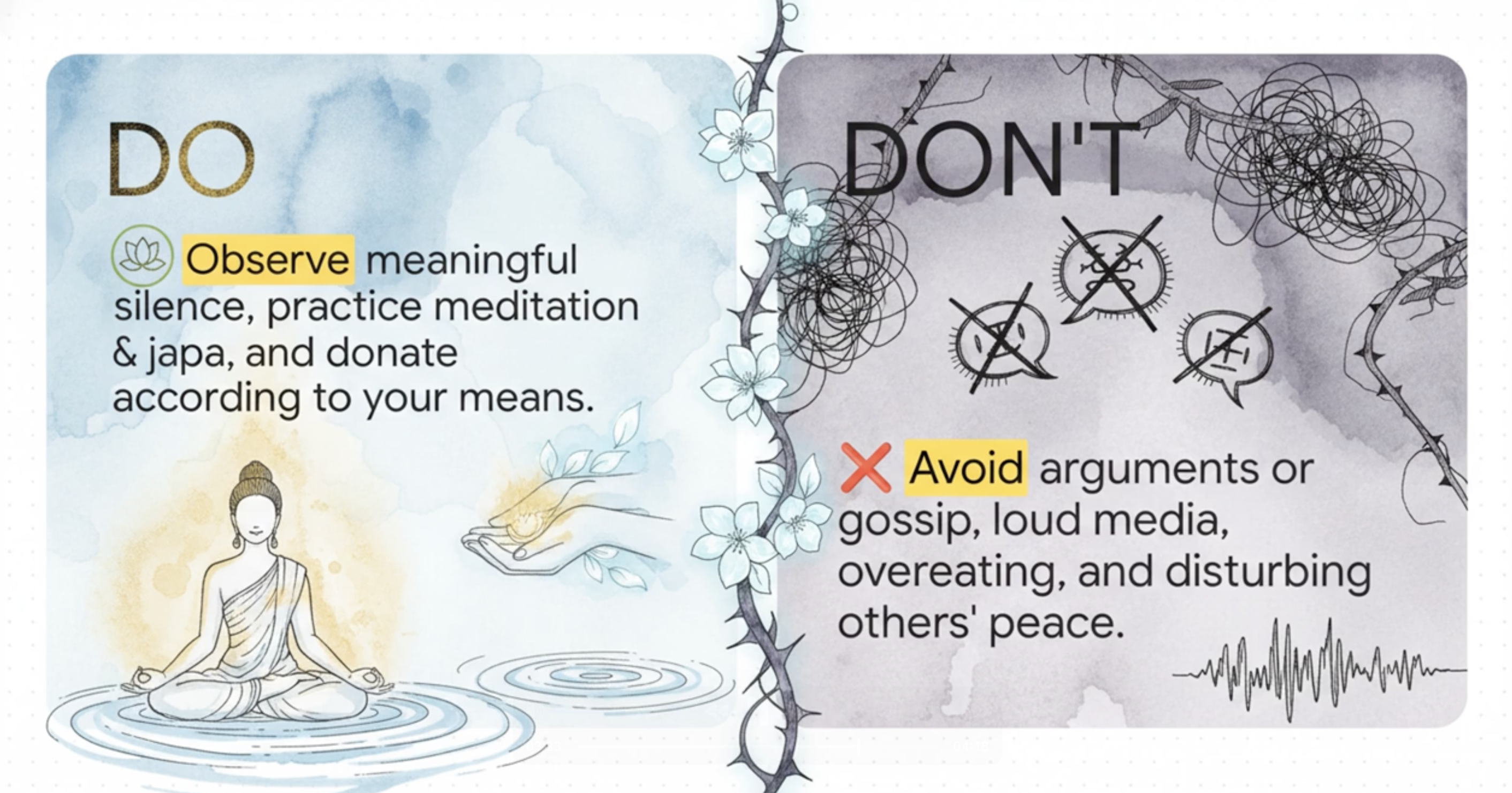
- Observe silence for a meaningful period.
- Take a dawn bath; add Ganga jal if available.
- Practice japa, meditation, and uplifting reading.
- Donate food, sesame, grains, or warm clothes according to your means.
Don’t
- Engage in arguments, harsh speech, or idle chatter.
- Overeat or indulge in stimulants; keep meals light and satvik.
- Disturb others’ observances or play loud media.
- Observing at home vs pilgrimage sites At home
- Keep your environment uncluttered and quiet; reduce screen time.
- Let family know your maun timings so they can support you.
- Create small rituals: a diya, a mantra, a few minutes of breathwork, and an intentional act of kindness.
At sacred sites
- If you’re visiting Prayagraj or another tirtha, plan an early snan and follow local safety and hygiene guidelines.
- Keep your items minimal, stay hydrated, and respect the silence of others even in a crowd.
- Extended guidance: Mind, body, and maun
- Breath focus: Try 4–6 breathing - inhale for 4, exhale for 6 - to calm the nervous system.
- Gentle movement: A slow walk or a few mindful stretches can make longer silence more comfortable.
- Journaling: If you end maun at sunset, note three things you’re grateful for and one intention you’ll carry forward this month.
FAQs about Mauni Amavasya 2026
Q: When is Mauni Amavasya 2026?
A: The Amavasya Tithi runs from 12:03 AM on January 18, 2026 to 01:21 AM on January 19, 2026. Most devotees will observe during the daytime on Sunday, January 18, 2026.
Q: Mauni Amavasya kab hai?
A: Mauni Amavasya January 2026 mein hai. Amavasya Tithi 18 January 2026 ko raat 12:03 baje shuru hokar 19 January 2026 ko 01:21 AM par samapt hoti hai. Din me 18 January ko snan-daan, maun vrat aur puja karna uchit hai.
Q: What is Mauni Amavasya? (Mauni Amavasya kya hota hai?)
A: It’s the Magha new moon day dedicated to silence, inner purification, snan-daan, and prayer - often with remembrance of ancestors and acts of charity.
Q: Mauni Amavasya meaning
A: “Mauni” means silence; “Amavasya” is the new moon day. Together, they signify a quiet, devotional reset - a time to simplify, purify, and give.
Q: Significance of Mauni Amavasya / Importance of Mauni Amavasya / Mauni Amavasya ka mahatva
A: The day supports deep introspection and spiritual focus. Silence preserves mental energy; snan and daan purify and soften the ego; prayers elevate intention. Many traditions consider Amavasya ideal for Pitru remembrance and acts of charity.
Practical planning checklist for January 18, 2026
- The night before: Set your maun timing and lay out simple clothes and puja items.
- Early morning: Bathe at dawn. Light a diya, do japa, keep the home quiet.
- Before noon: Donate food, sesame, grains, or clothes; feed birds/animals.
- Afternoon: Read something uplifting, rest, maintain silence or soft speech.
- Evening: Short meditation, gratitude, close the day humbly and simply.