Did you know - Makar Sakranti is one of the few Indian festivals that is tied directly to an astronomical event rather than a lunar tithi. :)
It marks the moment the Sun enters the Capricorn sign (Makara), beginning its northward journey known as Uttarayan.
Celebrated across India in different forms - from kite flying to harvest rituals - Makar Sakranti represents renewal, discipline, gratitude, and movement toward light.
If you’re searching for “Makar Sakranti 2026” or wondering “Makar Sakranti kab hai?”, this guide covers the exact date, time, meaning, rituals, and traditions in a clear, practical way.
If you are more of a video person, feel free to glance through this YouTube video -
Makar Sakranti 2026 at a glance
- Makar Sakranti 2026 date: Wednesday, January 14, 2026
- Sankranti moment (Sun enters Capricorn): around 3:13 PM IST
- Punya Kaal: Afternoon of January 14, typically from about 3:13 PM to around 5:45 PM
.png)
Is Makar Sakranti on 14 January?
You’ll often see debates on whether Makar Sankranti falls on the 14th or the 15th. The reason is simple: the festival is tied to the Sun’s actual transition into the Capricorn sign (Makar). If that moment happens after sunset, many customs shift key observances to the next day. In 2026, the transition is in the afternoon on January 14, so the main observance is on the 14th itself.
Makar Sakranti meaning: what the day stands for
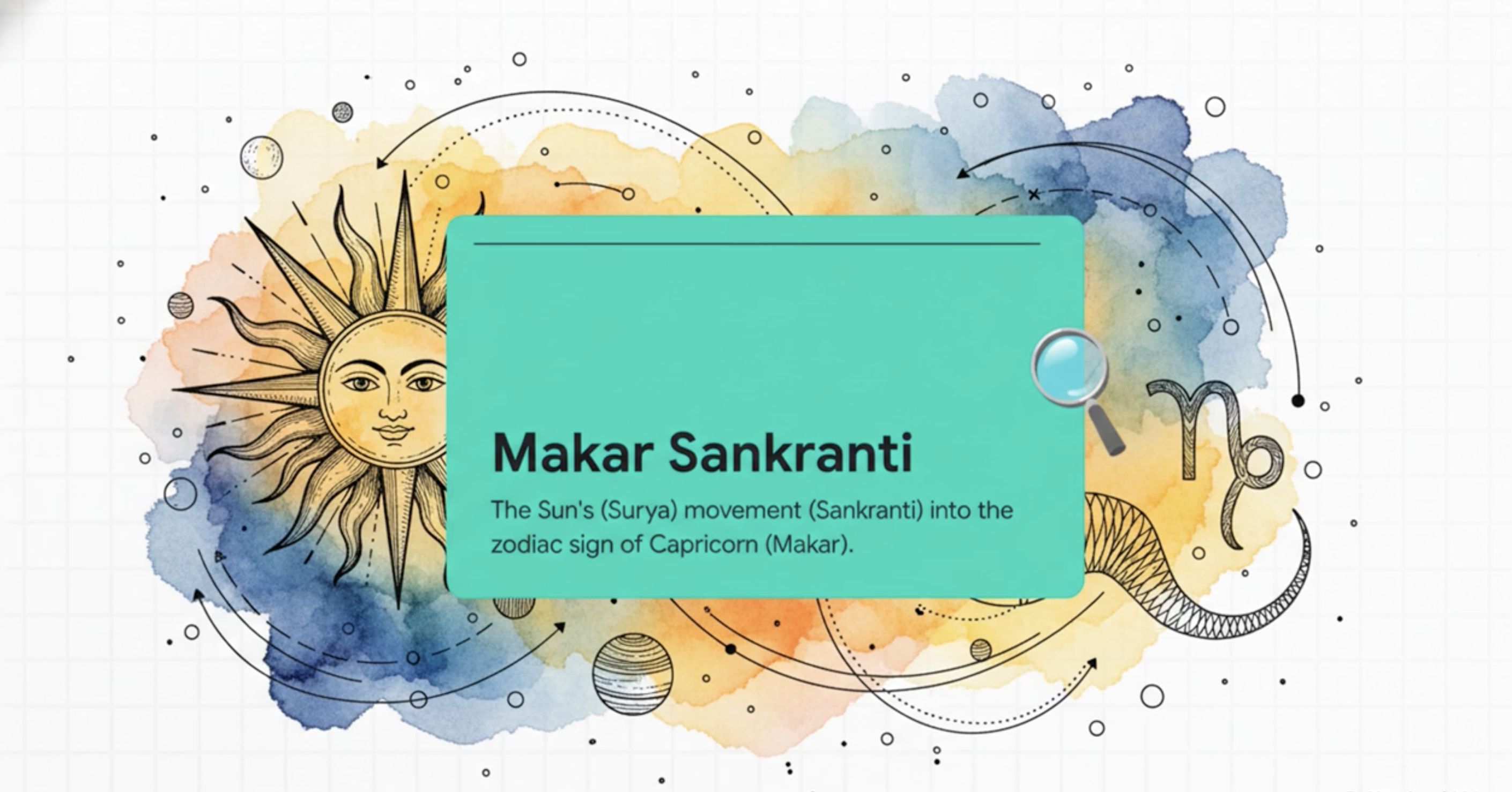
- The word “Sankranti” means the Sun’s movement from one zodiac sign to another; “Makar” refers to the Capricorn sign.
- Spiritually, it marks the start of Uttarayan - the Sun’s six-month northward journey - associated with light, renewal, merit, and auspicious beginnings.
- Culturally, it’s a harvest festival, a moment to thank nature and share the season’s goodness with family and community.
- Symbolically, sesame (til) and jaggery (gud) sweets represent warmth, sweetness, and unity. You’ll hear “til-gud ghya, god god bola,” especially in Maharashtra - accept til-gud and speak sweetly.
Why is Makar Sakranti celebrated?
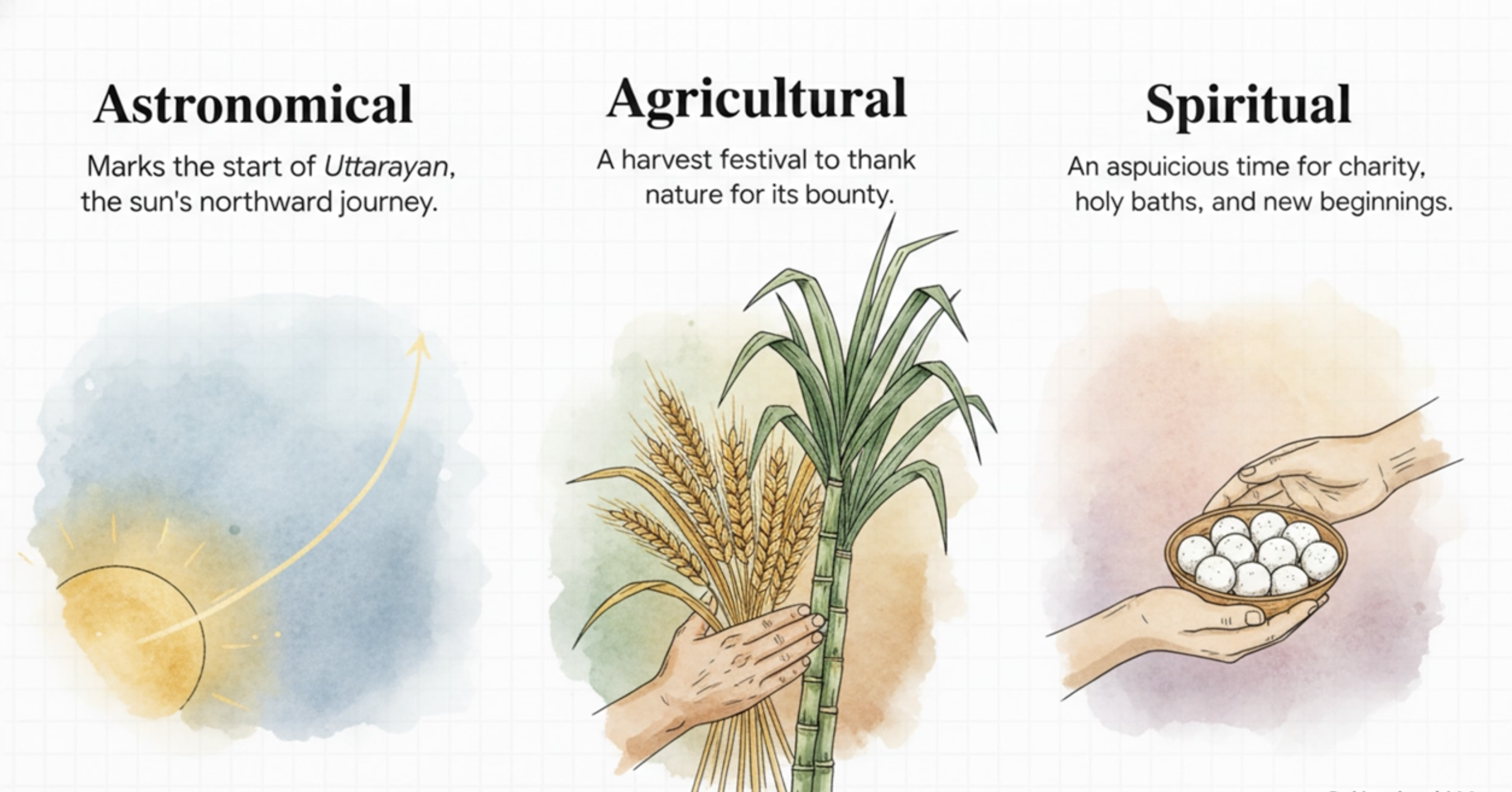
- Astronomical Reason: It is one of the few Indian festivals based on a solar calendar event, the Sun’s movement into Capricorn.
- Spiritual merit: The day is considered powerful for snan (holy baths), daan (charity), and japa (prayer/chanting). Many believe that acts of charity on this day carry enhanced merit.
- Agricultural thanksgiving: Across India, farmers mark the harvesting of rabi crops, build community ties, and share festive meals.
- Cultural unity in diversity: From Gujarat’s Uttarayan to Tamil Nadu’s Pongal and Assam’s Magh Bihu, the day showcases India’s diverse, yet connected, traditions.
What Sankranti means in Jyotisha:
In classical jyotisha, a Sankranti is the exact moment the Sun enters a new sidereal rashi (sign). Brihat Parashara Hora Shastra (BPHS) treats it precisely this way and even details remedial rites when someone is born right at a Sankranti, confirming the ingress-based definition in the tradition .
BPHS also lays out a Sankranti puja framework: install the main Sankranti idol along with Surya (Adhideva) and Chandra (Pratyadhideva), perform worship with appropriate mantras, and conduct havan. Sesame (til) is explicitly used in the offerings - beautifully aligning with how families still share til-gud on Makar Sankranti .
- Why Makar (Capricorn) matters on this day:
- BPHS describes Makara as Saturn’s earthy sign, strong at night, “rising with back,” with its first half quadruped and its second half footless, moving in water - the classical image often portrayed as a sea-creature composite. That’s the sign Surya enters on Makar Sankranti .
- Brihat Jataka also classifies Makara among night-strong (ratri-bala) signs and discusses sign categories like prishtodaya (rising backward), echoing BPHS’s descriptive framework of the sign’s temperament and strength .
- The classical remedial ethos around Sankranti:
- BPHS preserves a full vrata–puja tradition for Sankranti birth: kalasha installation, Sankranti–Surya–Chandra worship, Mrityunjaya japa (28/108/1008, as possible), havan with sesame and ghee, and acts of daan (charity), including feeding Brahmins. That’s a clear textual anchor for the living customs of snan, arghya to Surya, til–gud, and charity on Sankranti day .
How to celebrate Makar Sakranti 2026 at home
Key timing note
Date: January 14, 2026
Perform core rituals after the Sankranti moment in the afternoon, ideally before sunset.
Simple materials
Use what you have - sincerity matters more than perfection:
- Diya, agarbatti
- Water lota with til, rice, and a flower
- Til-gud, fruits, khichdi
- Daan items (til, gud, grains, blanket, or food)
Step-by-step ritual flow
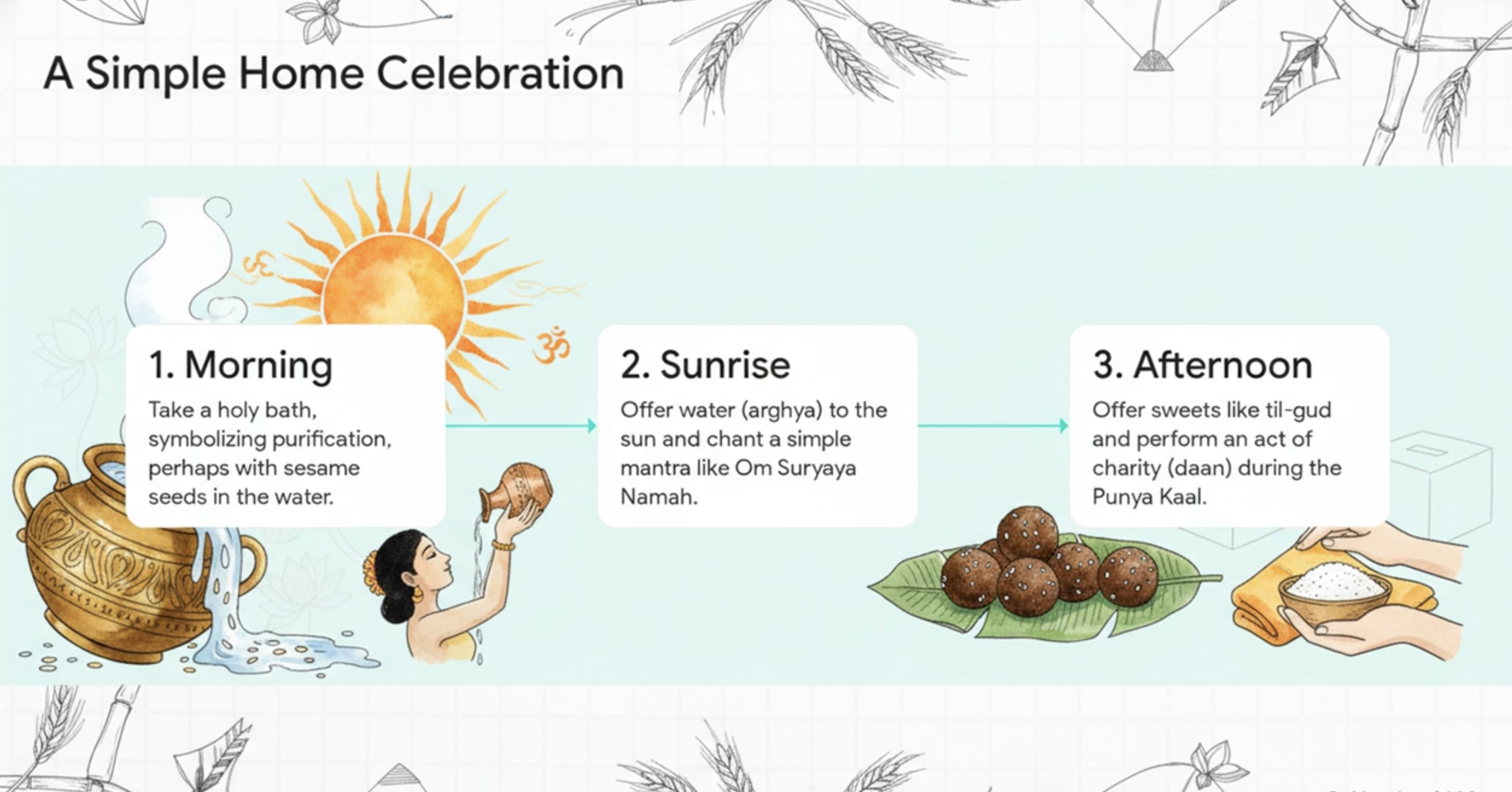
Morning
- Snan (optional til in bath water)
- Light diya, set intention (sankalp)
Sunrise
- Offer Surya arghya (3 times)
- Chant Om Suryaya Namah or Gayatri Mantra (11 or 27 times)
- Bow to elders
Afternoon (Punya Kaal focus)
- Light diya again
- Offer naivedya (til-gud, khichdi, fruits)
- Chant Om Suryaya Namah 108 times
- Perform daan
Evening
- Light diya at sunset
- Express gratitude
Regional celebrations across India
Makar Sankranti goes by many names and flavors in India
Regional celebrations across India
- Uttarayan (Gujarat): Kite-flying, undhiyu, jalebi-fafda
- Pongal (Tamil Nadu): Surya Pongal, kolams, cattle gratitude
- Magh Bihu (Assam): Community feasts, bonfires
- Lohri (Punjab): Bonfires, bhangra, til-gur treats
- Poush Sankranti (West Bengal): Pithe-puli, Ganga Sagar Mela
- Khichdi Parv (UP/Bihar): Khichdi offerings and charity
Traditional foods to try on the day
- Til laddoo and gajak: Sesame-based sweets symbolize warmth and strength during winter.
- Chikki: Groundnut or sesame brittle that’s crunchy, sweet, and perfect for sharing.
- Puran poli: Sweet flatbreads stuffed with chana dal and jaggery - rich, festive, and nostalgic.
- Khichdi: The humble, hearty staple - light and sattvic, often offered to deities and shared with all.
- Pongal: Sweet and savory versions alike are central in the South.
- Pithe: Bengal’s rice-based sweets, from steamed to fried varieties, often flavored with date palm jaggery.
Fasting and guidelines
- If you keep a Sankranti fast, keep it light and sattvic. Sesame, jaggery, fruits, and khichdi are common choices.
- Focus more on intention than strictness: the day emphasizes charity and gratitude.
- If you have dietary restrictions or health conditions, adapt your fast sensibly - Sankranti is about goodwill and balance.
Makar Sakranti wishes you can send
English wishes
- Happy Makar Sakranti 2026! May the Sun’s northward journey bring you warmth, health, and prosperity.
- Wishing you sweet til-gud memories and sky-high success this Sankranti!
- May your home be filled with light, gratitude, and good harvests. Happy Makar Sakranti!
- Rise with the Sun and shine through the year - Happy Makar Sankranti!
- Til-gud, smiles, and sunshine - have a joyful Sankranti 2026!
Hindi wishes
- Makar Sakranti ki hardik shubhkamnayein! Til-gud ghya, god god bola.
- Surya bhagwan ki kripa se aapke jeevan mein unnati ho. Makar Sakranti 2026 ki shubhkamnayein!
- Is pavitra avsar par sabke jeevan mein sukh-samriddhi aaye. Sankranti ki badhai!
- Uttarayan ke is shubh din par aapki sabhi manokamnaayein poori hon. Happy Makar Sankranti!
- Til ka meetha, gud ki mithaas, rahe har din aapke saath. Sankranti ki shubhkamnayein!
Do’s and don’ts for Makar Sakranti 2026
Do
- Bathe early, offer Surya arghya, and keep a calm, devotional start to your day.
- Time your puja and daan during the afternoon Punya Kaal and Maha Punya Kaal on January 14, 2026.
- Share food and warmth: til-gud, khichdi, blankets, or clothes for those in need.
- Choose eco-friendly celebration methods - kites, strings, and cleanup.
Don’t
- Use metal or glass-coated manjha; it’s dangerous and often illegal.
- Fly kites near roads, power lines, or during peak bird activity.
- Neglect local muhurat variations - if exact minutes matter to you, check your city panchang.
- Overexert if you’re fasting; Sankranti’s spirit is giving and balance, not hardship.
FAQs
- When is Makar Sakranti 2026? Makar Sakranti 2026 falls on Wednesday, January 14, 2026. The Sankranti moment is in the afternoon, so the primary observances are on the 14th.
- Makar Sakranti kab hai 2026 mein? Makar Sakranti 2026 budhwar, 14 January ko hai. Sankranti ka samay lagbhag 3:13 baje dopahar (IST) hai.
- What time is the Sankranti moment in 2026? Around 3:13 PM IST on January 14, 2026. Perform core rituals and charity during or after this time in the Punya Kaal.
- Why is Makar Sakranti celebrated? It marks the Sun’s entry into Capricorn and the start of Uttarayan - considered highly auspicious for snan, daan, and spiritual merit - and a thanksgiving for the harvest.
- Is Makar Sankranti sometimes on January 15? Yes, when the Sankranti moment occurs late evening or night on the 14th, many communities shift key observances to the 15th. In 2026, the moment is mid-afternoon on the 14th, so the festival is on January 14.