If you’ve been waiting for the first big festival of spring, Basant Panchami 2026 is your cue to step into the light - quite literally.
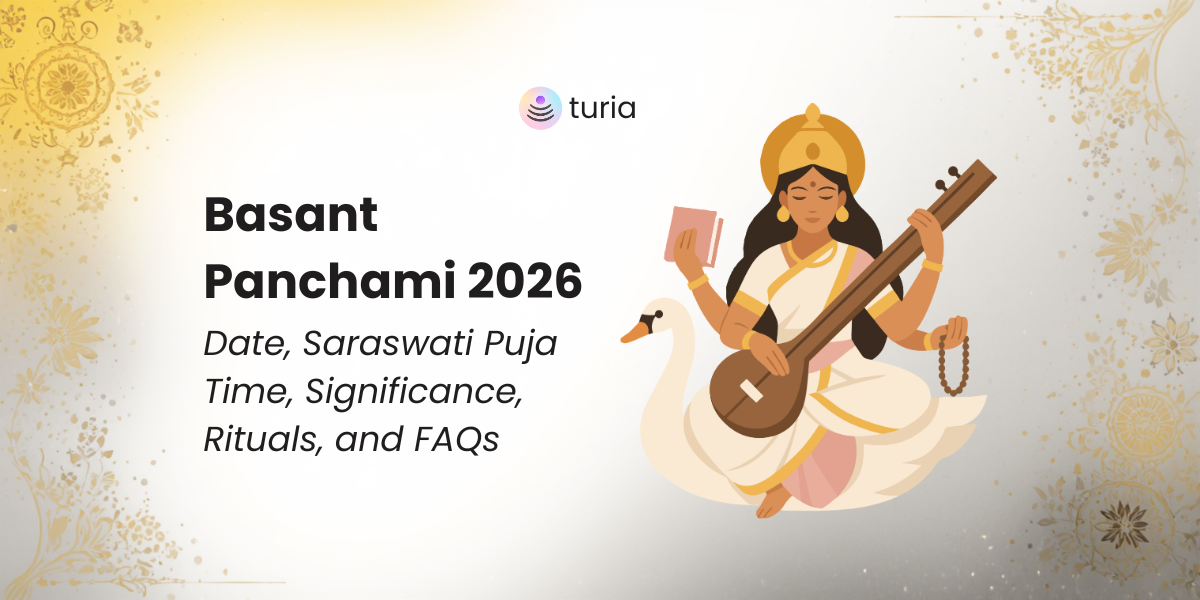
This bright, joy - filled day honors Goddess Saraswati, the embodiment of knowledge, wisdom, music, and the arts.
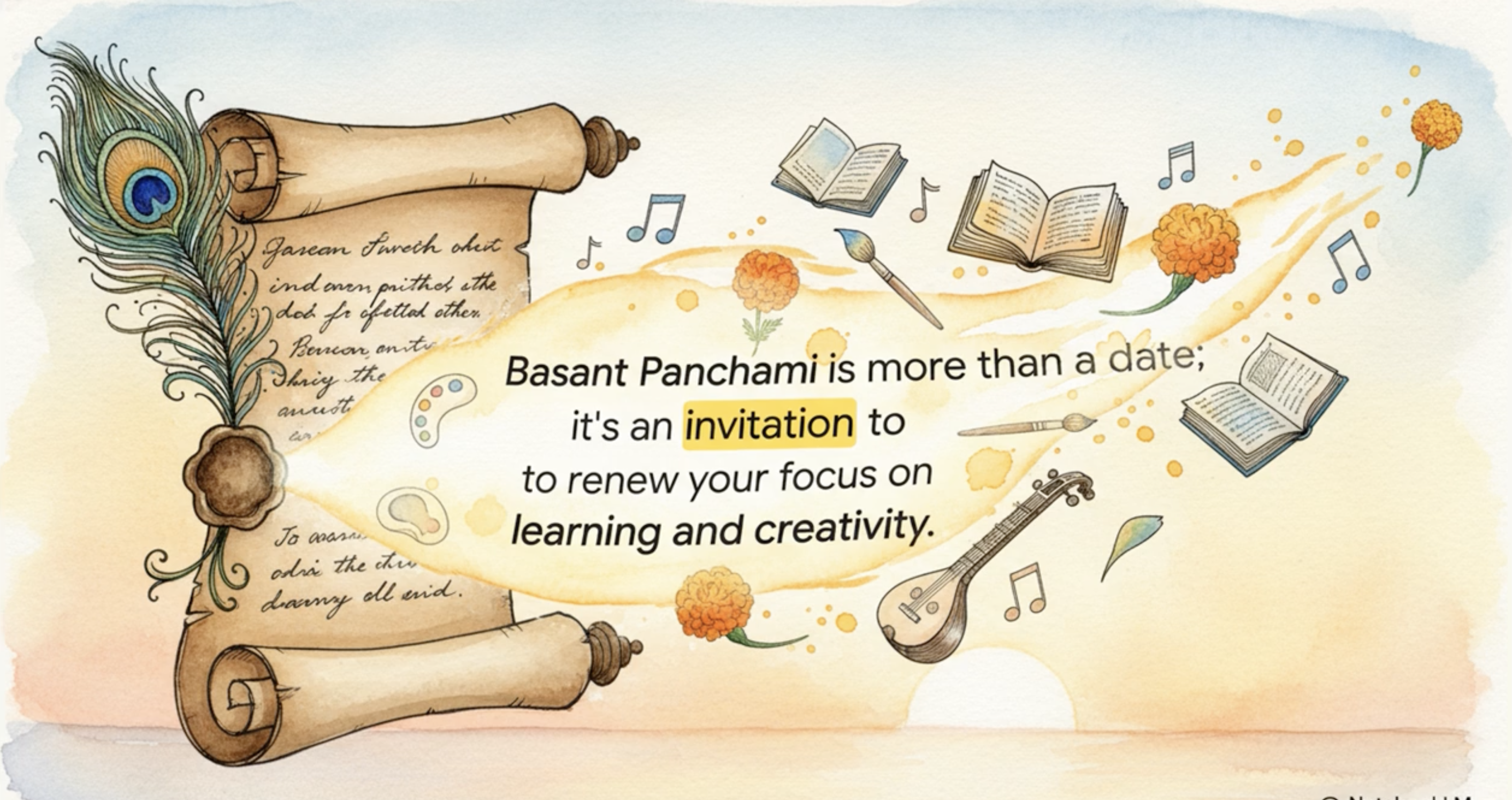
It’s the time when schools, cultural institutions, artists, and students across India and beyond pause to seek blessings for learning and creativity.
Below is your complete, friendly, and practical guide to Basant Panchami 2026 - covering date, muhurat, rituals, meaning, regional vibes, and answers to all the common questions.
Basant Panchami 2026 at a glance
- Festival: Basant Panchami (also called Vasant Panchami, Shri Panchami)
- Primary focus: Saraswati Puja - seeking blessings for knowledge, expression, and creativity
- Dress theme: Yellow/white (symbolizing clarity, purity, and mustard bloom)
- Tone of the day: Fresh starts, joyful energy, learning, music, and community
What is Basant Panchami?
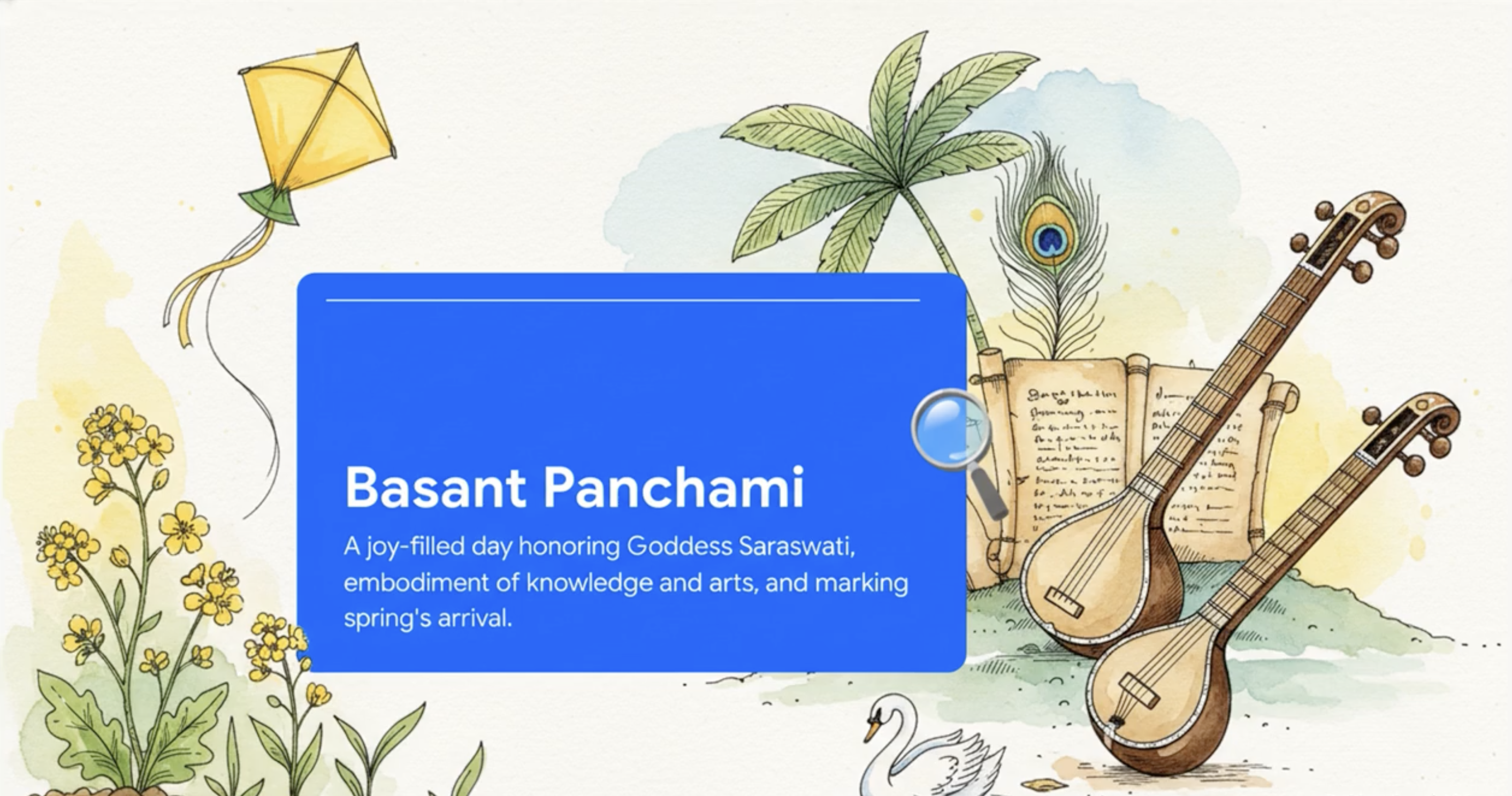
Basant Panchami (or Vasant Panchami) marks the arrival of spring - vasant, the season of new growth, saffron fields, mild breezes, and a general uptick in hope. Spiritually, the day is dedicated to Saraswati Devi, the goddess who symbolizes vidya (learning) and kala (arts).
People place books, musical instruments, notebooks, pens, and study tools near her idol or picture, light lamps, offer flowers and prasad, and invite her blessings before resuming studies or creative pursuits.
You’ll find schools and colleges performing Saraswati Puja, students writing the first letters of their learning journey (especially for young children), and artists starting new pieces or rehearsals. The presence of yellow everywhere - clothes, rice, sweets, and decorations - speaks to the mustard bloom and the bright mood of spring.
Why is Basant Panchami celebrated?
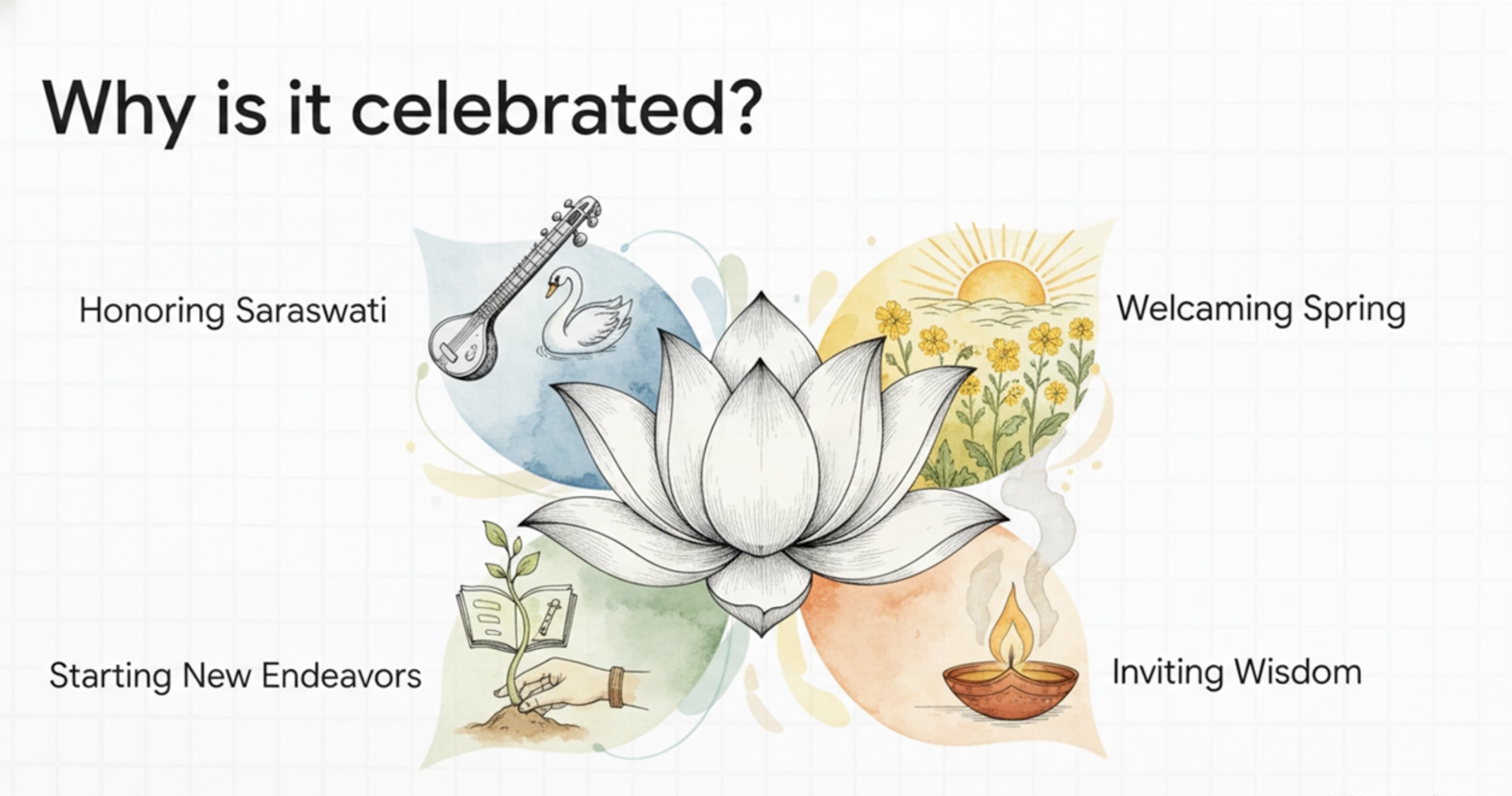
- To honor Saraswati, the source of knowledge, speech, music, and fine arts.
- To welcome spring and the positivity, clarity, and fresh energy it brings.
- To start new academic or creative endeavors under a benevolent, auspicious influence.
- To invite focus and wisdom into the home and the mind.
There’s also a broader cultural significance: after winter’s pause, communities gather - sometimes with kites and fairs - to affirm togetherness, learning, and light.
Basant Panchami 2026 dates
- Basant Panchami 2026 date (India): Friday, January 23, 2026
- Vasant Panchami 2026 date: Same day - Vasant and Basant refer to the same festival
Why there’s sometimes confusion: Panchami tithi can straddle two Gregorian dates. The prevailing tradition is that the festival is observed when Panchami is present at sunrise (Udaya tithi). In 2026, that places the celebration on Friday, January 23 across most of India.
Basant Panchami 2026 kab hai?
- Basant Panchami 2026 kab hai? 23 January 2026, Friday.
Panchami tithi in 2026 (India)
- Panchami starts: around 2:28–2:29 AM on January 23, 2026 (IST)
- Panchami ends: around 1:45–1:46 AM on January 24, 2026 (IST) Note: Tiny differences can occur by location.
What is the time of Saraswati Puja on Basant Panchami 2026?
Saraswati Puja is traditionally done during the daytime while Panchami prevails. In 2026, commonly reported muhurat windows for India are:
- Approximately 7:13 AM to 12:33/12:34 PM, or
- Approximately 7:15 AM to 12:50 PM
What is Vasant Panchami?
Exactly the same festival - Vasant is the Sanskrit/Hindi term for spring. So if you see Vasant Panchami 2026 dates or “Vasant Panchami Festival” information, it’s talking about the same celebration as Basant Panchami 2026.
Significance of Basant Panchami
- Spiritual meaning: Saraswati signifies clarity, wisdom, expression, and the flow of knowledge. Invoking her on this day is believed to remove mental fog and spark learning.
- Cultural meaning: Spring is linked with optimism, renewal, and creativity - perfect for starting classes, projects, writing, music lessons, or art.
- Educational and artistic: Many teachers and institutions consider it an ideal day to commence courses, recitals, workshops, or exams with a simple prayer.
Rituals and how to celebrate (home puja)
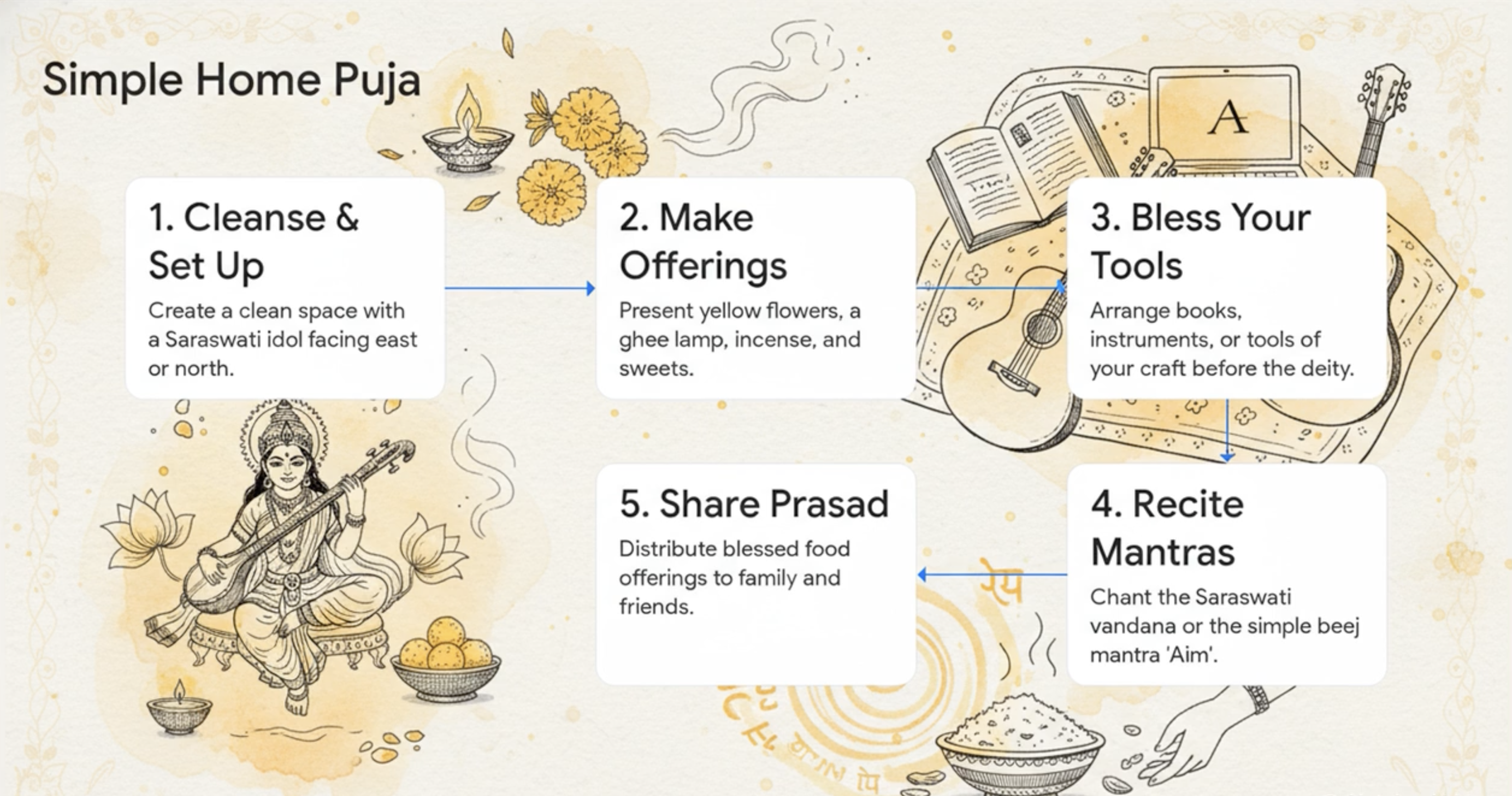
- Cleanse and set up: Choose a clean space facing east or north. Place an idol or picture of Saraswati.
- Offerings: Yellow or white flowers (marigold, chrysanthemum), a ghee diya (lamp), incense, fruits, and sweets (boondi laddoo, kesari, saffron rice).
- Books and instruments: Arrange notebooks, pens, textbooks, musical instruments, brushes, or any tool of your craft in front of the deity. As a gesture of reverence, many people avoid touching these items for the rest of the day after the puja.
- Clothing: Wear yellow or white to resonate with the day’s sattvic (pure, calm) energy and the season’s bloom.
- Mantras and prayers: Recite Saraswati vandana or the beej mantra “Aim.” Keep it simple and heartfelt if you’re new to puja - clarity matters more than complexity.
- Prasad and sharing: Distribute prasad to family, friends, or neighbors. If you’re in a community setting, ensure safe and hygienic distribution.
Community and regional flavors
- North India: Kite - flying, music, and small fairs create a bright, social atmosphere. Families and friends gather outdoors to enjoy the early spring weather.
- Bengal and Odisha: Saraswati Puja pandals pop up in schools, colleges, and neighborhoods. Students participate actively; educational settings feel festive and reverent.
- Punjab and Haryana: The countryside turns gold with mustard fields; yellow - themed clothing and dishes dominate the day.
- Across India: Cultural programs - dance, music, poetry readings - celebrate the arts under Saraswati’s inspiration.
Foods, colors, and styling the day
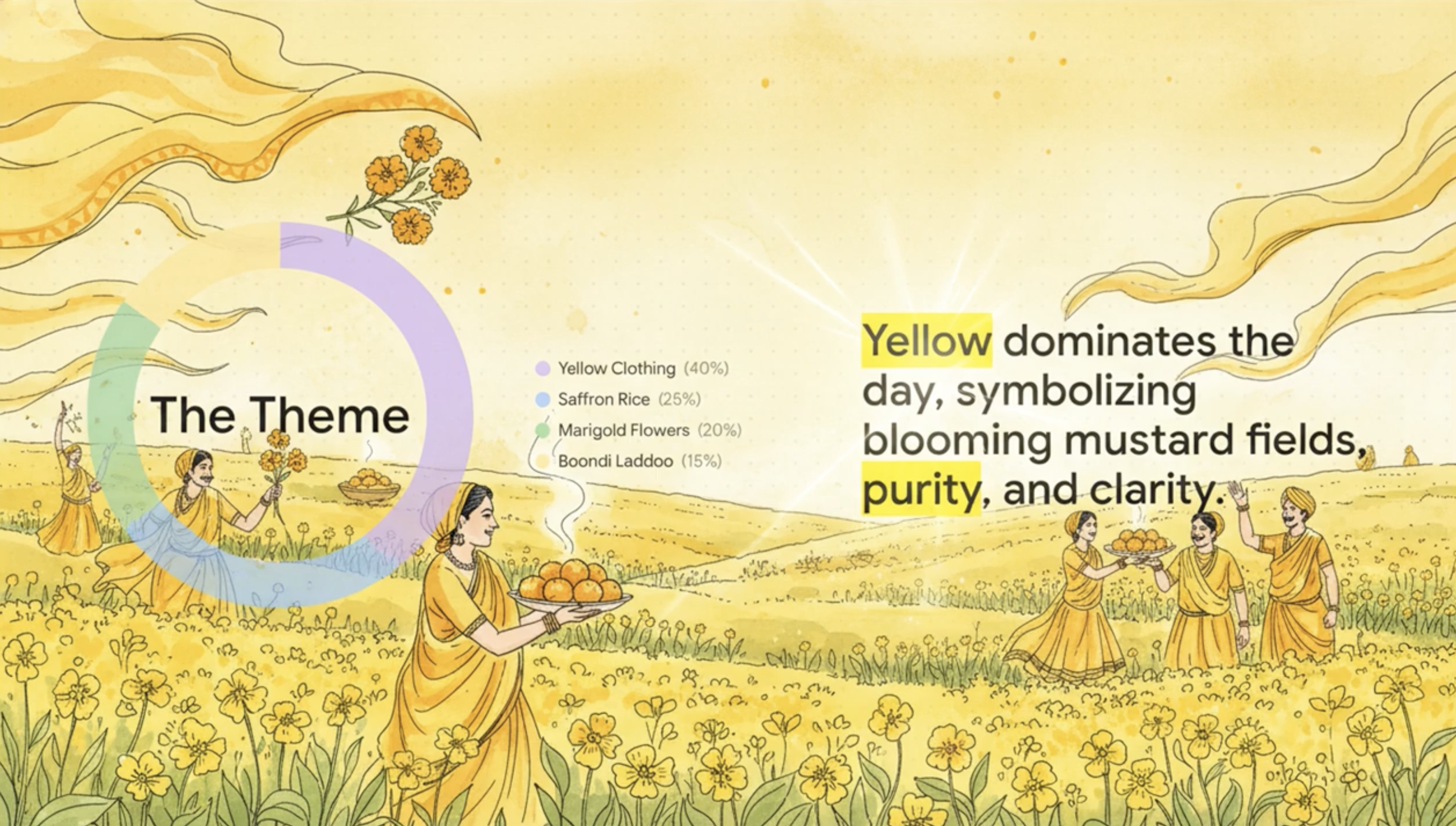
- Color: Yellow and white. Think marigolds, mustard drapes, lemon hues, and light cottons.
- Classic bites: Saffron rice (zarda or meetha chawal), boondi laddoo, kesari halwa, and seasonal sweets. You can keep it lighter with fruits if you prefer.
- Decor: Fresh flowers, simple rangolis, and a clean study or music corner - decluttered and calm.
Do’s and don’ts on Basant Panchami
- Do:
- Begin learning, music practice, or any creative skill today.
- Keep your study space tidy. If you can, assign a small sacred spot to books and instruments.
- Wear yellow/white and keep your mindset gentle and receptive.
- Donate study material like notebooks, pens, or books to students in need.
- Don’t:
- Engage in actions considered inauspicious or unnecessarily harsh today. Many consider Basant Panchami an abujh muhurat - naturally auspicious for starting good works.
- Turn it into a rush. The day’s energy is sattvic and steady - lean into mindful celebration.
Blending tradition with modern wellness

- Set a learning intention: Use the day to define 1–3 learning goals for the next 30 days.
- Deep work tip: Try 25–50 minute focus blocks for reading, practice, or writing - device - free if possible.
- Creativity booster: Sketch, sing, practice scales, or write a page - make the puja meaningful by doing what Saraswati symbolizes.
- Gratitude journaling: Note three learnings you’re grateful for and one skill you wish to develop this spring.
FAQs: Quick answers
- When is Basant Panchami 2026? Friday, January 23, 2026 (India).
- Basant Panchami 2026 kab hai? 23 January 2026, Friday.
- What is the time of Saraswati Puja on Basant Panchami? Perform during the daytime Panchami. Commonly reported windows in India are roughly 7:13 AM to 12:33/12:34 PM, or 7:15 AM to 12:50 PM. Adjust based on your city’s sunrise.
- What is Vasant Panchami? The same as Basant Panchami - celebrating spring and Saraswati.
- Why is Basant Panchami celebrated? To honor Saraswati and invite wisdom, clarity, and creativity; to welcome spring’s renewal.
- Is it okay to start new classes or projects? Yes. It’s one of the best days in the year to begin learning or creative work.